
How to Start a Gratitude Journal in Retirement

If you have been thinking about starting a gratitude journal but are not sure where to begin, you are in good company. Many retirees feel the same way – curious but a little unsure about what it involves and whether it is worth the effort. The short answer: it is, and it is much simpler than you think. This guide walks you through everything from picking a format to writing your very first entry, with no pressure and no fuss.
Key Takeaways
A gratitude journal is simply a place to jot down what went well today. There are no rules, no grades, and five minutes is plenty to begin. You do not need fancy stationery or a complicated system – any notebook, calendar, or simple app will work for your gratitude entries. Starting a gratitude journal can shift your mindset and reduce stress from the very first week.
Gratitude journaling boosts happiness, supports mental health, improves sleep, and can even benefit physical health. These are not abstract promises; they show up in studies of people between 60 and 88, meaning the evidence applies directly to this stage of life. For retirees navigating less structure and more quiet days, this practice offers a gentle anchor.
Here is one concrete first step for starting a gratitude journal: tonight, before bed, write down three things from today you are grateful for, with the date at the top of the page. That is the whole exercise. And if you miss a day tomorrow, that is completely normal. Keeping a gratitude journal is about gentle consistency, not perfection. There is no right or wrong way to do this.

What Is a Gratitude Journal, Really?
A gratitude journal is a dedicated space – start with paper or digital – where you regularly write down things you are thankful for. It could be a good cup of morning coffee, a phone call from a friend, fewer aches than yesterday, or sunlight through the kitchen window. The entries do not need to be profound or dramatic.
This is not the same as a traditional diary. You are not recording every event or summarizing your day. Instead, you are choosing to focus on what went right, even on ordinary days. That deliberate focus is what gives the practice its power. When you practice gratitude on paper, you train your mind to scan for the positive aspects of daily life – small moments that might otherwise slip by unnoticed.
Gratitude journals can take any form: a lined notebook, a wall calendar with sticky notes, or a basic notes app on a phone. The content matters far more than the appearance. A few examples tailored to retired life:
- “Quiet morning walk – no rush to be anywhere.”
- “Knees felt strong climbing the stairs today.”
- “Old friend from 1974 called out of the blue.”
Why Gratitude Journaling Is Especially Helpful in Retirement
Retirement brings real shifts. There is more unstructured time, fewer external demands, and sometimes a gap where work identity and daily routines used to be. Health worries can creep in. Old colleagues drift away. These changes are natural, but they can leave space for self-doubt or low mood if nothing steps in to fill it.
Starting a gratitude journal can support mental health by offering gentle structure and a daily reminder of purpose during this new life stage. It takes five minutes, gives the day a small anchor, and refocuses attention from what has been lost toward what remains – or what is new. Counting current blessings like time for hobbies, grandchildren, slower mornings, and the freedom to read without a deadline can ease feelings of loss tied to career or youth. Practicing gratitude strengthens emotional resilience: noticing what still works and who still cares for you can soften anxious or lonely moments. It also enhances self-esteem and self-awareness over time, because you start seeing your own life more clearly.
Imagine a Tuesday in February. You had morning tea by a sunny window, walked to the mailbox at noon, talked to a grandchild on the phone in the afternoon, and cooked a favorite recipe in the evening. Possible gratitude entries:
- “Sunlight through the window in the morning – felt warm and peaceful.”
- “Legs held up well on the walk – grateful I can still be active.”
- “Grandchild’s phone call – heard stories about school, felt connected.”
- “Cooked that chicken recipe – taste reminded me of Mom’s kitchen.”
Science-Backed Gratitude Journal Benefits
The gratitude journal benefits are not just anecdotal. Regular gratitude journaling boosts happiness and overall mood, reduces stress and anxiety levels, and is linked with better mental health outcomes in older adults. In several studies of people between 60 and 88, gratitude and savoring interventions produced medium to large effects on well-being and also reduced symptoms of depression and loneliness.
Gratitude journaling improves sleep quality and duration. Jotting down three good things before bed calms a racing mind, and a virtual group gratitude intervention for adults 59 and older found reductions in self-reported sleep problems after just four weeks. Writing in a gratitude journal can improve mood and reduce stress in measurable ways within two to four weeks of starting.
On the physical health side, gratitude is associated with healthier behaviors – more walking, better diet, lower blood pressure risk over time – though it is not a medical treatment and should not be treated as one. Emotionally, retirees who journal regularly often notice less rumination about the past, more satisfaction with the present, and greater appreciation of relationships. Expressing gratitude for human connections, in particular, enhances happiness and well being. Gratitude journaling also strengthens relationships with others, because when you notice what people do for you, you tend to express it back.
Choosing a Gratitude Journal Format That Suits You
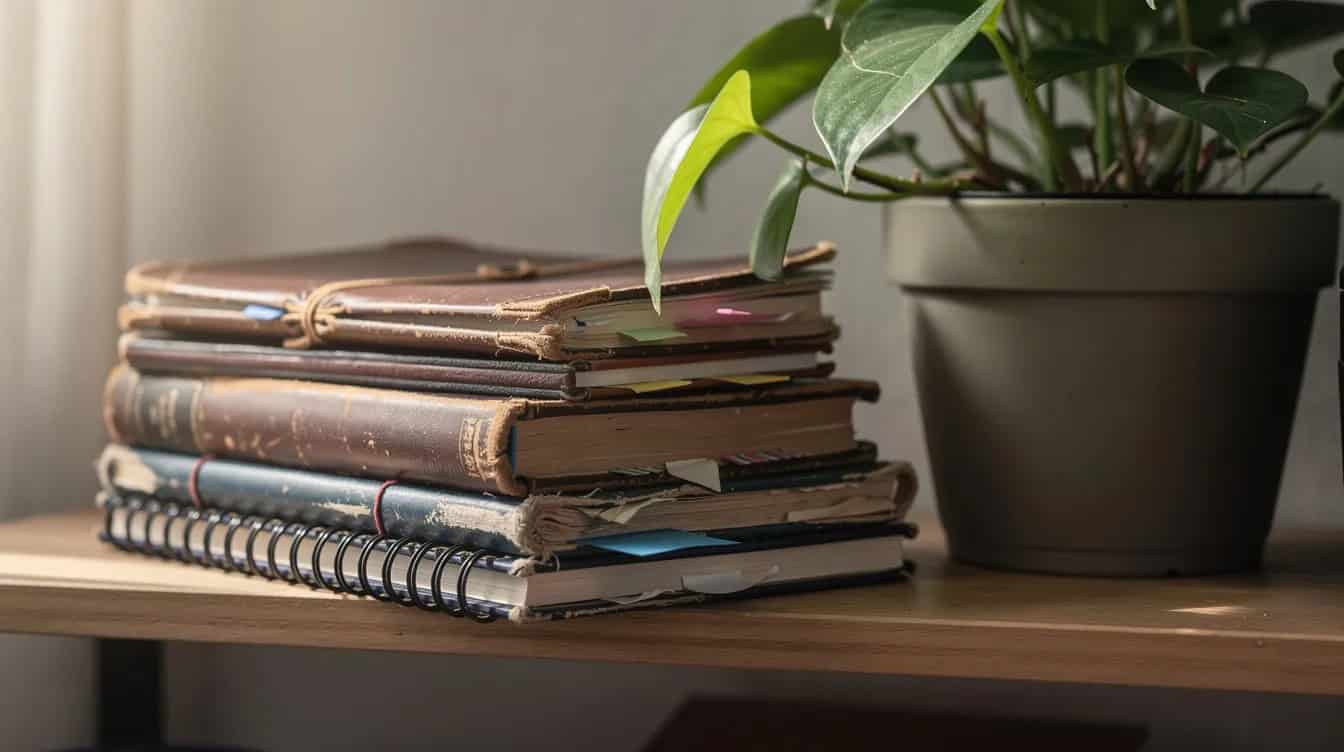
The “best” gratitude journal is the one you will actually use. Simple is perfectly fine. Choose a journal that feels special and personal to you – something you enjoy picking up – but do not overthink it.
Here are the main options:
Format | Best for | Things to consider |
|---|---|---|
Paper notebook | Those who enjoy writing by hand; no tech needed | Writing by hand often deepens emotional connection in journaling. Select a size based on your writing habits – A5 for portability, letter-size for ample room |
Small notepad or index cards | Very short notes; keep in a pocket, purse, or by a favorite chair | Great for people who prefer brevity |
Digital app or phone “Notes” | Convenience, larger text, voice-to-text | Consider a digital app for accessibility, especially with vision or hand issues |
A guided journal | Beginners who want structure | A guided journal includes prompts to help cultivate gratitude |
If you have arthritis or shaky hands, wider-ruled paper, a comfortable ergonomic pen, or voice-to-text on a phone or tablet can make things easier. Select a cover design that inspires you to write regularly – even a sticker on a plain notebook can do the trick. Research suggests that both digital and paper formats deliver similar benefits for reflection and mood, so go with what feels natural.
Choose just one primary format for the first month. This avoids decision fatigue and lets you build the habit without second-guessing your tools.

Setting Up Your Gratitude Journal for a Gentle Start
Setup should take no more than 10 to 15 minutes. Perfection is not required to start writing.
On the first page, write your name and the start date – for example, “Started October 19, 2026.” Below that, add a heading like “Why I’m Keeping a Gratitude Journal” and list two or three brief reasons personal to you:
- “I want to sleep better.”
- “I don’t want my good moments to blur together.”
- “I’d like to feel more gratitude for the people around me.”
For your basic page structure, keep it simple: date at the top, then a numbered list of three things you feel grateful for that day. Leave plenty of blank pages and blank space – no need for decorations unless you genuinely enjoy doodling or adding photos. Find a quiet, comfortable place to write your journal, whether that is your bed, a favorite armchair, or the kitchen counter. Write in a quiet, comfortable space without interruptions if you can manage it.
Your Very First Gratitude Entry: A Step-by-Step Guide
This will take five minutes or less. Here is exactly what to do:
Step 1: Choose a time today. For many people, tonight after brushing teeth works well. Most people journal at the start or end of their day, and either is fine.
Step 2: Open the journal, write today’s date, and title the page “First Gratitude Entry.”
Step 3: Ask yourself: “What went even slightly better than average today?” Write three things you appreciate each day. Beside each item, add one short sentence about why it mattered. Reflect on why you are grateful for each entry – specific details in gratitude journaling enhance emotional recall, so go beyond vague labels.
Step 4: Do not worry about neatness, spelling, or grammar. Content matters more than calligraphy. Putting pen to paper is the whole point.
Sample entries for a retired person:
- “Phone call from my daughter – felt included in her busy life.”
- “Walked around the block without knee pain – grateful my legs are still carrying me.”
- “Had time to read the paper with hot coffee – no need to rush anywhere.”
- “Neighbor brought over tomatoes from her garden – small act of kindness, big smile today.”
What to Write When You Feel Stuck
Some days feel dull or difficult, especially with pain, grief, or bad news. That is normal. Prompts can help overcome gratitude block on days when the blank pages stare back at you.
Shift your focus to very small, concrete things. Reflecting on small, fleeting moments can enrich gratitude practices – a warm blanket, a favorite TV show, the sound of birds outside, a reliable neighbor, or medical staff who help manage health issues. Use concrete language: instead of “I’m grateful for my home,” try “I’m grateful for the way afternoon light hits the kitchen floor.”
A few prompts for when you are stuck:
- Who helped me this week?
- What can my body still do for me today?
- What memory from another decade makes me smile right now?
- One thing I saw, heard, smelled, tasted, or touched today that I appreciated.
Incorporating contrast in reflections can enhance feelings of gratitude too – for example, remembering a harder time and noticing how things are easier now. On very hard days, simply writing “I’m grateful this day is over and I can rest now” still counts as a valid entry. Even that is a way to express gratitude.
Simple Gratitude Journal Prompts for Retirees
To get you started, here are gratitude journal prompts designed for retired life. Using categories can generate gratitude ideas quickly – these cover relationships, time, health, home, and the past. Specific prompts encourage deeper emotional connections, and prompts can include reflections on personal strengths.
Relationships:
- Who made your daily life easier this week?
- Who taught you something valuable years ago that still helps you?
- Which family member or friend would you most like to thank today?
Time and freedom:
- What do you enjoy about not rushing to work in the morning?
- How did you use your extra time today in a way that felt good?
- What is one moment of inspiration you noticed today?
Physical health:
- What is one way your body supported you today?
- Which small habit today might support your physical health in the long run?
Home and surroundings:
- What do you appreciate about where you live right now – the view, the neighbors, the quiet?
- Something beautiful you saw today, even on a cloudy or sunny day.
Past blessings and personal growth:
- Think of a year that was important to you (for example, 1980 or 1995). What from that year are you still grateful for today?
- A challenge you faced recently – and something good that came out of it.
- What positive qualities in yourself helped you get through a tough time?
- What lesson from earlier in your life still serves you now?
Ten prompts alone can help you recognize diverse gratitude areas you might not have considered. Swap them around to keep things fresh.

Start Making Gratitude Journaling a Gentle Daily Routine
Five minutes a day is enough. The aim is consistency, not long essays. Set a regular time each day for journaling.
The easiest way to build the habit is through habit stacking – linking the new practice to something you already do. Write after your morning coffee, after the evening news, or just before turning off the bedside lamp. That existing routine becomes your anchor, so you do not need to remember a separate commitment.
Try a trial period: “Every night for the next two weeks, I’ll write three gratitude entries.” Treat it as an experiment, not a lifelong contract. If the experiment works, keep going.
Physical reminders help. Keeping a journal visible can serve as a reminder to write – leave it on your pillow during the day, set a phone alarm labeled “3 good things,” or place a pen on top of the notebook at your favorite chair.
Missing a day of journaling is not a failure; consistency matters more than perfection. Do not try to “catch up.” Just write the next date and continue. Self criticism about missed days defeats the purpose entirely.
Keeping Gratitude Journaling Enjoyable, Not a Chore
Anything done daily can start to feel like homework. The goal is for this to remain light and quietly pleasant.
Vary the pace: some days a quick list of three positive things, other days a longer paragraph about one meaningful moment. Research suggests longer reflection increases benefits of gratitude practices, so when you have the energy, linger on an entry that matters. But on tired days, a short list is just fine. Quality of entries matters more than quantity in gratitude journaling, and daily journaling can be beneficial, but variability is more sustainable.
Varying gratitude entries helps prevent the practice from feeling rote. Try different angles: one day focus on relationships, the next on something physical, the next on a memory. For creative expression, use different colored pens, tape in a ticket stub or printed photo, or draw a tiny symbol beside especially meaningful entries – but only if it feels fun, not like extra work.
Occasionally read back over a few past pages on a low-mood day. You will find it is a gentle reminder that good things do show up regularly. Reflecting on one’s own actions – times you helped someone, solved a problem, or tried something new – can also enhance what you get out of the practice.
There is no grading system. If the practice stops feeling helpful, adjust frequency (three times a week, for instance) or style, rather than quitting entirely.
Looking Back: How a Gratitude Journal Supports the Bigger Picture
After a month or two, your gratitude journal becomes more than daily notes. It becomes a record of this chapter of life – showing patterns, people, and activities that repeatedly bring joy.
Set aside time at the end of each month to skim entries and notice themes. Which small routines, relationships, or places appear often? These patterns can guide choices: spending more time on what clearly boosts happiness, reduces stress, or improves sleep – evening walks, phone calls with a certain friend, book clubs, cooking. Intentional gratitude practices can help develop a balanced perspective on what matters most right now.
Some retirees share selected entries with a family member or close friend as a way to deepen connections. Reading a few aloud, sending a page – it is a meaningful impact that goes beyond personal reflection. It can end on a positive note for everyone involved.
Even if nothing dramatic changes outwardly, noticing and honoring these daily blessings can quietly transform how retirement feels from the inside. That overall sense of well being, that positivity that builds week after week – it is real, and it starts with a simple act of writing down what went well.
Frequently Asked Questions
How often should I write in my gratitude journal to see benefits?
Journaling three times weekly is effective for most people, and daily is ideal if it feels manageable and pleasant. More research continues to confirm that benefits like better sleep, improved mood, and a more positive mindset tend to appear after two to four weeks of regular journaling, even with brief entries. You can write in your gratitude journal first thing in the morning or reflect on gratitude right before going to sleep – both work. Occasional gaps do not erase progress. What matters is returning to the gratitude journaling practice when you can.
What if my days feel very quiet and nothing special seems to happen?
Quiet days are perfect for this. They are exactly when regular journaling trains the eye to notice small comforts and routines. Focus on tiny details: a favorite mug, a neighbor’s wave, the comfort of a familiar TV show, a moment of joy watching birds at the feeder, or simply having enough time to rest without a schedule. Many people in busier stages of life long for the slow, simple feelings retirees can now savor. Treat “ordinary” as worthy of ink.
Can I use my gratitude journal to write about worries too?
The main purpose is to record what is going well, but worries naturally leak in. If one appears, write it down briefly, then add one small thing related to it you are thankful for – “I’m worried about my health, but grateful I have a doctor I trust.” This keeps the overall space focused on the positive impact of the practice. If you want to explore worries in more depth, consider a separate notebook for general journaling and preserve your gratitude journal as a mostly positive space.
Is it better to write in the morning or at night?
Both have advantages. Mornings set a positive tone for the day. Evenings help calm the mind and lead to better sleep. Experiment for one week each way and choose what feels more natural. The best time for your gratitude practice is whichever time you are most likely to stick with. Start a gratitude journal at the time that fits your life, and adjust later if needed.
Do I need a special “gratitude journal” product to get the benefits?
No. You do not need to buy a branded guided journal unless you simply enjoy nice stationery. A plain notebook, a leftover school exercise book, or a simple notes app on a phone or tablet will deliver the same benefits. Do not wait to purchase something new. Start today with whatever you already have at home. The positive psychology behind this practice has nothing to do with the cover of the notebook – it is about what you write inside it.
Disclosure: Some of the links in this article may be affiliate links, which can provide compensation to us at no cost to you if you decide to purchase. This site is not intended to provide financial advice. You can read our affiliate disclosure in our privacy policy.
