
Low Impact Exercises for Seniors: A Gentle Guide to Staying Active
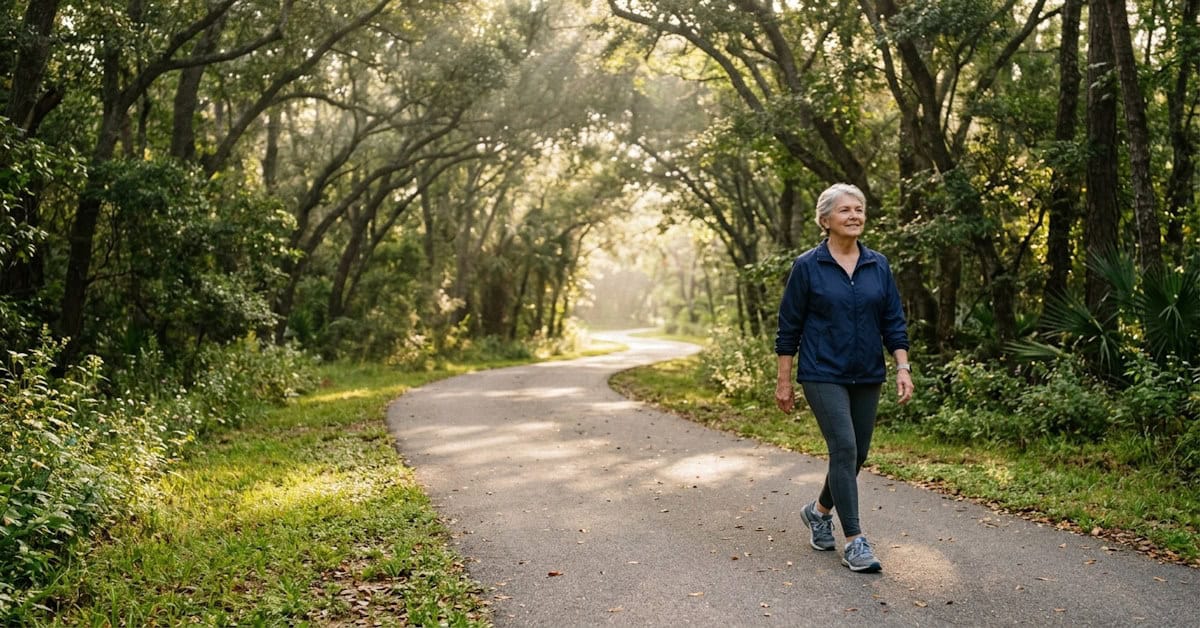
Staying physically active after retirement does not require a gym membership, heavy weights, or a grueling schedule. Low impact exercises for seniors protect joints while building strength, heart health, and balance. This guide covers specific options, from walking and water aerobics to chair yoga and tai chi, with real numbers on what works and practical advice on how to start.
Key Takeaways
- Low impact exercises like walking, swimming, chair exercises, and tai chi help older adults stay active while protecting joints and managing chronic conditions such as arthritis and high blood pressure.
- Even short 5 to 10 minute sessions, done most days of the week, can improve muscle strength, improve balance, and energy levels.
- Talk with your doctor before starting a new exercise routine, especially if you have chronic illnesses, a history of falls, or very high blood pressure.
- Any movement counts. Starting slowly with simple exercises like seated leg lifts or short walks is both safe and effective.
- This article covers low impact cardio exercises, chair exercises, chair yoga, stretching, tai chi, and a sample weekly routine tailored for seniors.
What to Consider Before Starting a Low Impact Exercise Routine
Planning your approach to physical activity matters more after age 60, not because exercise is dangerous, but because a little preparation prevents setbacks. This section is about setting yourself up for success.
Consult your primary care doctor or cardiologist before beginning, especially if you have heart disease, uncontrolled blood pressure, recent surgery, lung disease, or frequent dizziness. Bring questions about safe heart rate ranges, limits on lifting, and whether water aerobics, walking, or cycling fit your health status.
Start with low intensity and short sessions (5 to 10 minutes) and build up over several weeks. Warm up before increasing exercise intensity to prevent injury. Stop immediately if you notice:
- Chest pain or pressure in your jaw or arm
- Sudden, severe shortness of breath
- Loss of balance or dizziness
- Sharp or worsening joint pain
- Unusual heart palpitations
Choose low impact exercises that do not aggravate existing joint pain in knees, hips, or lower back, and adjust as needed. Hydration is important before, during, and after physical activity. If you use a cane, walker, or wheelchair, the chair exercises and seated resistance work later in this article apply to you.
Why Low Impact Exercise Matters for Older Adults
Low impact exercises for seniors means at least one foot stays on the ground, or your body weight is supported by water or a machine. That limits peak forces through knees, hips, and spine.
Low impact exercises protect joints while building strength, heart health, and balance. Gentle movement helps manage blood pressure, improves cardiovascular health, and supports lung function without exhausting the body. For joints, water-based exercise and cycling reduce pain and stiffness in people with osteoarthritis.
Regular activity also improves coordination and enhances balance, lowering the risk of falls and fractures. The mental health benefits are concrete: better sleep quality, sharper thinking, reduced anxiety, and more day-to-day confidence in maintaining independence. Chair yoga studies, for example, found reductions in pain interference and fatigue during 8-week programs.
Even if higher impact exercises for seniors are no longer comfortable, low impact exercise can still build strength and stamina at your own pace.
Low Impact Cardio Exercises for Seniors
Low impact cardio exercises raise your heart rate gently without jumping or pounding on joints. Here are the most effective exercises in this category.
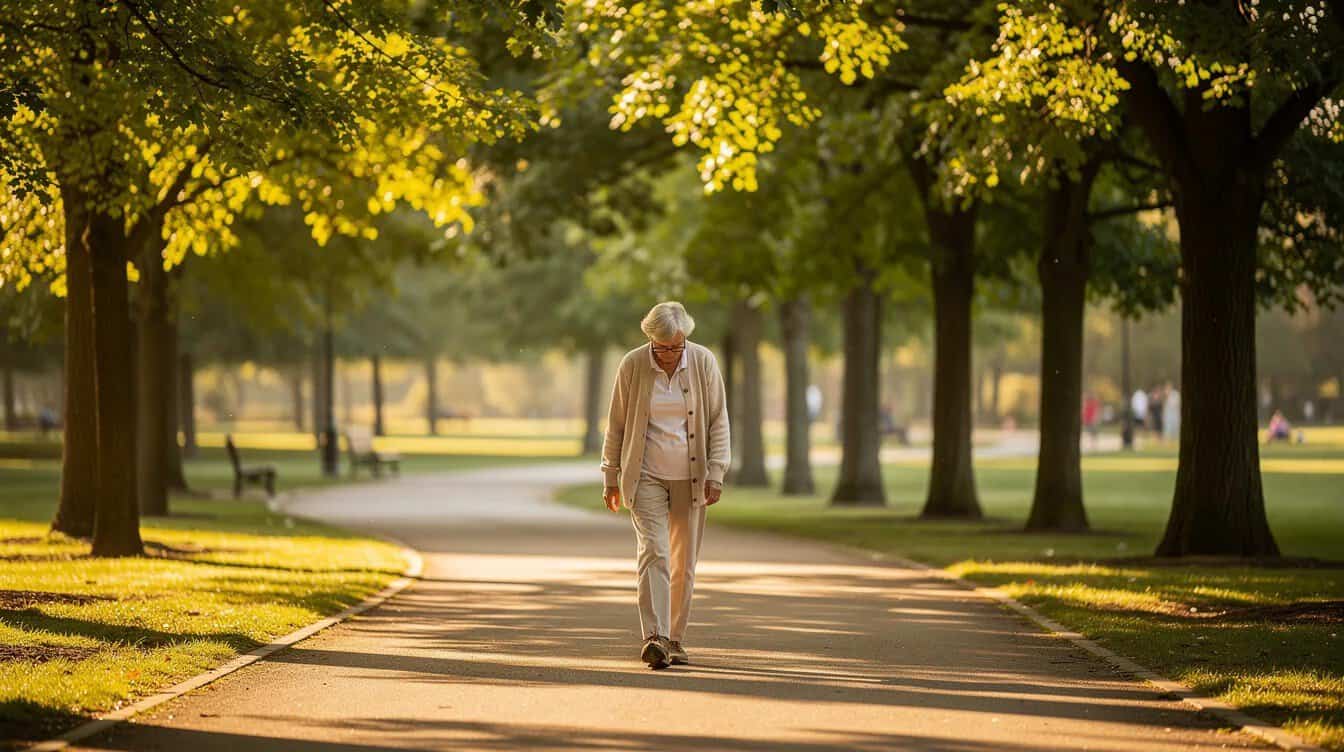
Walking is the simplest low impact cardio choice that many seniors enjoy. Walking improves cardiovascular health and requires no special equipment beyond supportive shoes. Start with 10-minute walks and build toward 30 minutes most days. Walking improves coordination and reduces fall risk for seniors. A meta-analysis of 46 cohort studies found that for every additional 1,000 steps per day (about 15 to 20 minutes of brisk walking), all-cause mortality risk dropped by roughly 13% in older adults.
Swimming and water aerobics are excellent for those with joint pain or balance concerns, because water supports body weight. Water aerobics reduces joint stress while providing resistance training. Swimming reduces stress on joints while enhancing muscle strength. The CDC recommends water aerobics for seniors with arthritis. Look for a water aerobics class at your community pool or YMCA.
Stationary and recumbent cycling strengthens the lower body and supports cardiovascular fitness. Stationary biking builds lower-body strength without stressing joints. A systematic review of 47+ studies in adults aged 60 and older found cycling 2 to 3 times per week for 30 to 45 minutes improved VO2 max, mobility, and cognitive function. The Arthritis Foundation notes that even low-intensity stationary biking reduces knee pain if the duration is sufficient.
Indoor options like dancing, marching in place, or gentle side steps while holding a counter work well for readers who prefer home exercise. These activities support cardiovascular fitness and bring enjoyment without special equipment. Adjust your low impact cardio exercise routine to your fitness level, with rest days and room to progress slowly.
Muscle-Strengthening and Balance Exercises for Older Adults
Strong leg muscles and upper body muscles protect joints and bones, help with everyday activities like carrying groceries or climbing stairs, and reduce fall risk. Strength training improves balance and coordination for seniors and helps prevent osteoporosis in older adults. Building muscle strength supports independence in seniors.
Effective exercises include:
- Chair squats: Stand in front of a sturdy chair, lower yourself slowly, then stand back up. Chair squats enhance leg strength and reduce fall risk.
- Wall push-ups: Stand arm’s length from a wall with feet shoulder width apart, shoulders relaxed, and press in and out. Builds upper body strength without placing stress on wrists.
- Supported heel raises: Hold a chair back, rise onto your toes, hold, and lower. Strengthens calves for better stability.
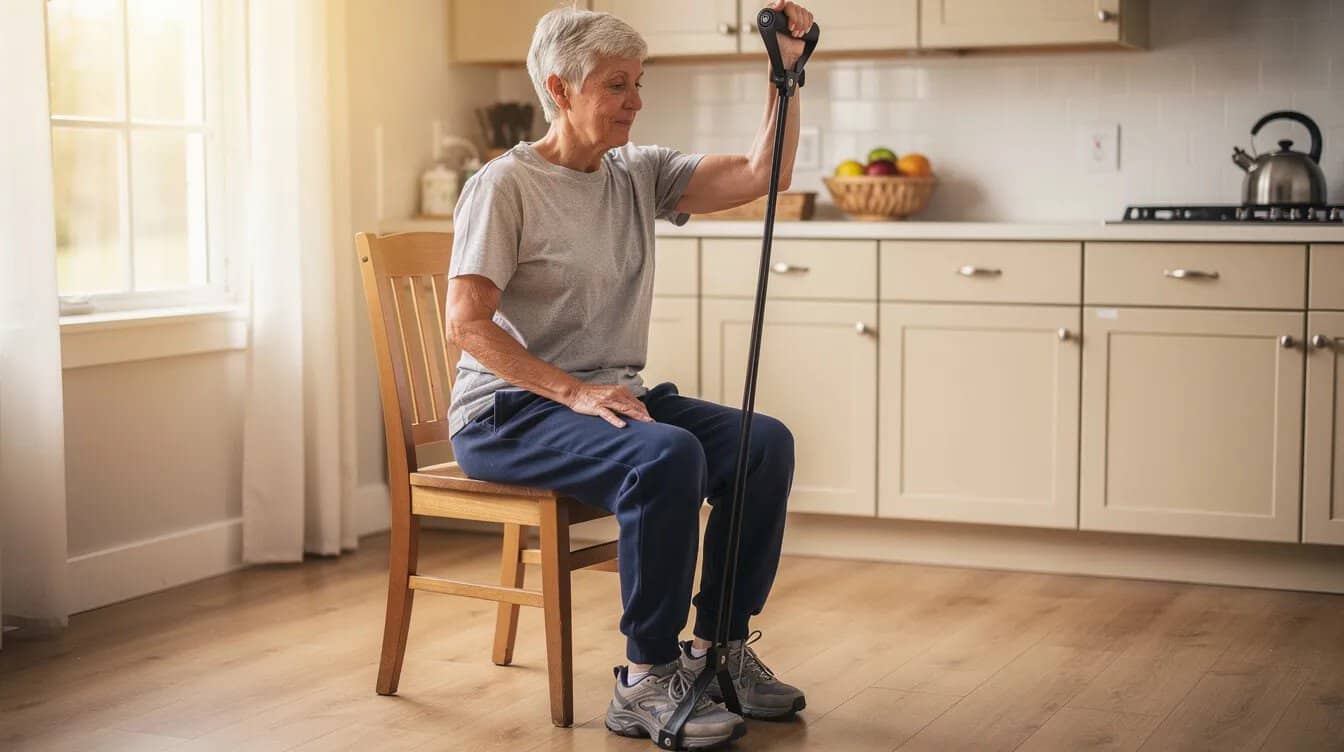
Resistance band exercises are a standout option. Resistance bands allow adjustable resistance for seniors and can target any muscle group. They are safe for seniors to use and can be performed seated or standing. Two sessions of resistance band exercises per week are recommended. A meta-analysis in frail older adults showed elastic band training over 12 to 28 weeks improved lower-limb strength, handgrip strength, and reduced frailty. Resistance band exercises help maintain muscle strength and prevent falls.
Leg lifts, both standing with support and seated leg lifts, help maintain lower body strength for walking and rising from a chair. Seated leg lifts improve lower body strength and flexibility.
Balance training is important for reducing the risk of falls. Simple drills: stand behind a sturdy chair on one foot for 10 to 15 seconds, or shift your weight side to side. Keep support nearby. Seniors should aim for strength training at least twice a week on nonconsecutive days, with 8 to 12 repetitions per exercise and rest between sets. A Cochrane review of 121 trials found resistance training produced large gains in muscle strength (effect size 0.84) and modest improvements in gait speed.
Chair Exercises and Chair Yoga for Seniors
Low Impact chair exercises and chair yoga are ideal for seniors with limited mobility, fatigue, or fear of falling. They require no special equipment beyond a sturdy chair without wheels on a non-slip surface.
Specific chair exercises include:
- Seated marching: Lift knees alternately while sitting tall.
- Seated leg lifts: Extend one leg straight in front, hold, lower, and switch. Leg raises like these build lower body strength.
- Arm circles: Extend arms to the sides, make small circles, then reverse.
- Gentle torso twists: Sit upright, rotate your trunk left and right.
- Seated jacks: Open and close arms and legs simultaneously. Seated jacks can be performed by seniors with limited mobility and help maintain cardiovascular fitness.
Chair yoga combines breathing, gentle stretching, and supported yoga poses to improve flexibility and range of motion for seniors. Chair yoga reduces stress and anxiety in older adults and enhances balance and coordination for seniors. It can be adapted for nearly any physical capability and requires only a sturdy chair without wheels. An RCT with 131 older adults with lower-extremity osteoarthritis found chair yoga twice per week for 45 minutes over 8 weeks reduced pain interference (p=.01). Chair yoga improves flexibility and reduces stress for seniors.
Start with 5 to 10 minute sessions and add poses or repetitions as comfort improves. Many community centers, senior centers, and online videos offer guided chair yoga classes marketed as low impact exercises for seniors. Chair exercises can enhance balance and coordination in seniors. Resistance band exercises can also be performed seated for muscle strength, making them a natural pairing with chair workouts.
Stretching, Tai Chi, and Other Gentle Mobility Work
Flexibility and gentle mobility work reduce stiffness, ease joint pain, and support upright posture. Stretching exercises are low impact and improve balance and flexibility for seniors.
Daily stretching for major muscle groups (calves, thighs, hips, chest, and shoulders) works best when you hold each stretch 15 to 30 seconds without bouncing. Gentle stretching after a walk or cycling session helps muscles recover. Gentle neck stretches relieve tension and improve flexibility, making them a good option after long periods of reading or television.
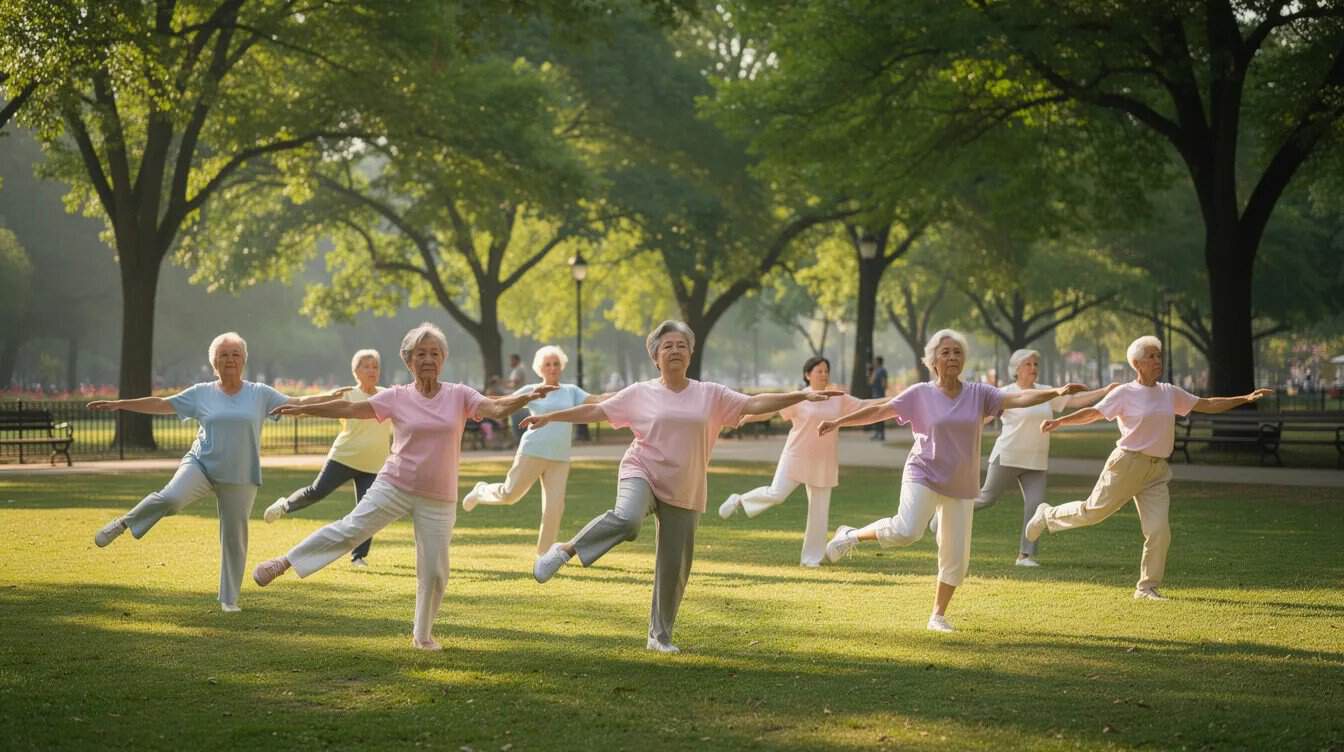
Tai chi is a traditional Chinese practice of slow, flowing movements that combines balance training, core engagement, and focused breathing. Tai chi improves balance and coordination for seniors and reduces fall risk in older adults. A meta-analysis of over 3,500 participants showed tai chi reduced fall rates by about 43% short-term and injury-related falls by roughly 50% in at-risk older adults. Tai chi enhances sleep quality for seniors and decreases arthritis pain in older adults. It is adaptable for nearly every fitness level, and many parks, YMCAs, and community centers offer beginner classes.
Consider ending your low impact workout or strength session with a few minutes of stretching or tai chi-style movements to cool down and improve coordination.
Creating a Safe, Realistic Weekly Exercise Routine
You can build a weekly routine that fits your overall health, energy, and schedule, even if you are starting after years of inactivity. The CDC recommends 150 minutes of moderate-intensity aerobic activity weekly for older adults, plus strength training on at least two nonconsecutive days. Starting with less is fine.
Here is an example simple weekly exercise routine:
Day | Activity | Duration |
|---|---|---|
Monday | Walking (brisk walking if able) | 20-30 min |
Tuesday | Resistance band exercises + balance drills | 15-20 min |
Wednesday | Water aerobics class or stationary cycling | 30 min |
Thursday | Chair yoga or stretching exercises | 15-20 min |
Friday | Walking | 20-30 min |
Saturday | Tai chi class or gentle dancing | 30 min |
Sunday | Rest or light gentle stretching | 10 min |
This adds up to roughly 150 minutes of moderate intensity activity, mixing low impact cardio, muscle strengthening exercises, and mobility work. For those who tire easily or manage chronic conditions, break activity into shorter blocks; three 10-minute walks spread through the day count just as much.
Track how you feel rather than chasing numbers. Adjust intensity on days with more joint pain, fatigue, or higher blood pressure readings. Schedule at least one lighter day for rest and recovery, and increase only one element at a time (time, frequency, or difficulty) to avoid overuse injuries. This approach supports a healthy weight and promotes healthy aging over the long term.
Staying Motivated and Listening to Your Body
Setbacks, flare-ups, and off days are normal. They do not erase your progress.
Choose activities you enjoy. Walk with a neighbor, dance to favorite music, or join a water aerobics class with friends. Set small, clear fitness goals: add 5 minutes of low impact cardio twice a week, or do chair exercises during one television program. These small wins add up.
Pay attention to how movement affects your energy, sleep, mood, and joint pain over several weeks. A simple notebook works. Differentiate between normal muscle tiredness (dull, fading soreness) and problematic pain (sharp, worsening, or located in a joint). Sharp or worsening joint pain should prompt rest and possibly a call to a health professional.
Regular exercise done consistently at moderate intensity delivers more overall well being than occasional hard sessions. Consistency matters more than intensity. The mental health benefits of an active lifestyle, from reduced anxiety to better mental well being, show up within weeks of steady, gentle effort. Staying physically active helps you stay independent and maintain your overall health and well being for years to come. It is never too late to start.
Frequently Asked Questions
These FAQs address common concerns not fully covered above, with practical advice for seniors and their families.
Is low impact exercise enough for heart health after age 65?
For most older adults, low impact cardio such as brisk walking, swimming, or cycling improves cardiovascular health and meets heart health recommendations when done regularly. The right intensity feels like you are slightly breathless but can still hold a conversation. Walking improves cardiovascular health, and stationary cycling improves cardiovascular fitness even at 60 to 70 percent of maximum heart rate. If you have a history of heart attack, stents, or heart failure, follow your cardiologist’s or cardiac rehab team’s guidance rather than general advice. Low impact exercises do improve cardiovascular health for most people at this stage of life.
Can I do low impact exercises if I have artificial joints or osteoporosis?
Many orthopedic surgeons and physical therapists encourage low impact exercise after joint replacement once healing is complete. Walking, water aerobics, stationary cycling, and chair exercises are typically safe after medical clearance. Avoid high impact jumping or twisting that could place stress on a replaced joint or weakened bone. Strength training helps prevent osteoporosis in older adults. Ask a physical therapist for a short customized exercise list if you are uncertain about safe movements after surgery.
How can I exercise safely if I use a walker or wheelchair?
Seated workouts, resistance band routines, and chair yoga provide effective exercises for strength and circulation without standing. Specific movements like seated leg lifts, arm curls with resistance bands, and trunk rotations can be adapted for people using mobility aids. Check chair stability, keep frequently used items within reach, and consider having someone nearby when trying new exercises. An exercise program built around these options supports disease control and overall well being.
What should I do if my blood pressure rises after exercise?
If you monitor blood pressure at home, check it before and about 30 minutes after exercise during the first week of a new routine. A small, temporary increase is normal. Very high readings, headaches, or chest discomfort warrant stopping and calling a doctor. Start with shorter, easier sessions and avoid exercise immediately after heavy meals or caffeine if your blood pressure is sensitive.
How quickly will I notice benefits from low impact exercise?
Some people feel improvements in mood, mental health, and sleep within one to two weeks of consistent activity. Changes in muscle strength, balance, and endurance often become noticeable after four to eight weeks of regular low impact exercise. Falls prevention benefits from tai chi generally become measurable after 16 to 24 weeks. Focus on gradual progress, such as walking a bit farther or needing less help with everyday activities, rather than expecting overnight results.
Disclosure: Some of the links in this article may be affiliate links, which can provide compensation to us at no cost to you if you decide to purchase. This site is not intended to provide financial advice. You can read our affiliate disclosure in our privacy policy.
