
How to Declutter Your Home for a Lighter, Easier Retirement

If you’ve spent 30 or 40 years in the same house, the idea of sorting through every closet, cabinet, and corner can feel like standing at the bottom of a mountain. You’re not just dealing with stuff. You’re facing decades of memories, habits, and identity wrapped up in physical objects. This post walks you through how to declutter your home at a pace that respects your energy, your emotions, and your back, so you end up with a space that feels lighter without feeling empty.
Key Takeaways
- Start with one small, visible area (like the entry table or kitchen counter) so you feel progress on day one and avoid feeling overwhelmed.
- Use simple keep / sell / donate / recycle / trash decisions, and remove bags from the house within 24 hours so items you plan to get rid of don’t creep back in.
- Work through your whole home and declutter in short sessions (30 to 60 minutes) rather than marathon days to protect your energy and your back.
- Give sentimental items the time and respect they deserve: keep the best, photograph the rest, and consider passing treasures to family now instead of someday.
- Once the big purge is done, use easy systems and a few well-chosen storage containers to stay clutter-free without feeling like you live in a showroom.
Why Decluttering in Retirement Feels So Hard
You grew up in a generation that saved things. Your parents may have lived through the Depression or wartime rationing, and they taught you to hold onto what you had because replacing it might not be possible. You repaired instead of replaced. You kept gifts out of respect for the person who gave them. That mindset served you well for decades, and it makes sense that letting go now feels like a betrayal of those values.
The emotional weight is real. The box of your kids’ school projects from the 1980s and 1990s is not just paper and glue; it’s proof of a life you built. Your husband’s old tools or your mother’s china carry the presence of people you love. Career memorabilia, military awards, travel souvenirs; these objects shaped your identity over a lifetime. Research on retirees and their possessions confirms this: interviews with more than 100 American retirees found that most older adults kept large numbers of items for “everyday convenience,” “future need,” or family obligation, often with no clear plan for what to do with them.
Then there’s the anxiety about fixed income. “What if I can’t afford to replace this?” is a reasonable question when your earning years are behind you. Survey data from adults over 50 show that after age 70, roughly 30% of people report doing nothing in the past year to reduce their belongings. Over 80% report selling nothing at all. The fear of future need stalls the process before it starts.
Here’s what I want you to hear: feeling attached is normal. The goal of decluttering your home is to create functional and comfortable living spaces, not a bare showroom. You get to keep the things that matter. You’re just clearing away the rest so your daily life gets easier.
How to Get Started Decluttering Without Feeling Overwhelmed
You can make visible progress decluttering your home in a single day, even if the whole project will take weeks or months. Breaking decluttering into manageable steps prevents overwhelming feelings, so the trick is choosing one spot that will give you a quick win.
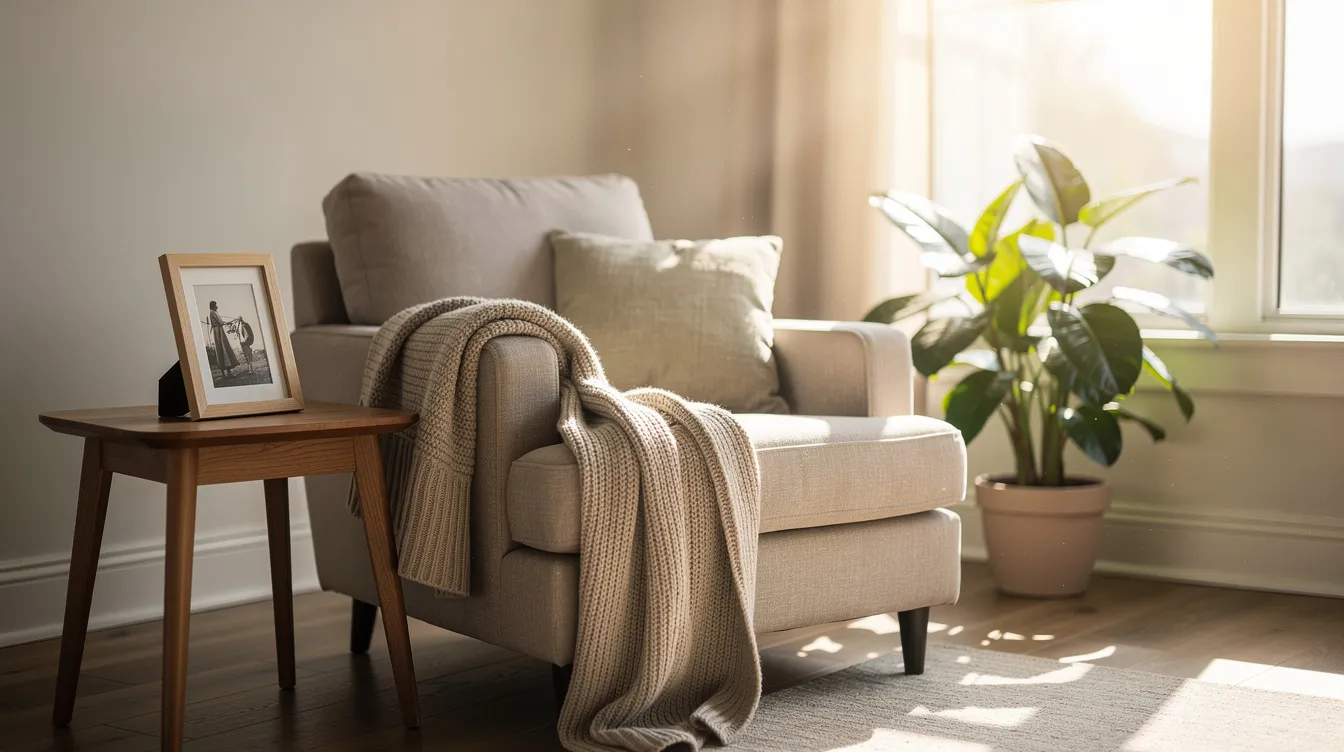
Pick a high-impact area you see every morning: the kitchen counter, the chair that always collects clothes, or the pile by the front door. Set a kitchen timer for 30 minutes. Setting a timer for organizing sessions avoids burnout and keeps the task from expanding into your entire afternoon.
Set up the 4-Box Method: label four bags or cardboard boxes as Keep, Donate/Sell, Trash, and Relocate (for items that belong elsewhere in the house). This structured rulebook prevents decision fatigue during decluttering of your home because each item gets sorted into one of four places with no “maybe” pile slowing you down.
Creating a dedicated donation box that stays near your front door encourages regular decluttering even after this first session. A 10-day checklist taped to the fridge can simplify home decluttering tasks and make the process feel contained rather than endless.
Your warm-up goal is not perfection. It’s proof that this is possible and that one cleared counter already makes the room feel lighter. Declutter your home in bite-sized chunks of time and you’ll surprise yourself by how much you accomplish.
Make a Gentle Plan for Your Whole House
Once you’ve proven you can handle one area, map the rest of the house on paper. List every space: bedroom, kitchen, living room, family room, bathroom, basement, attic, garage, closets, and any storage units. Circle the areas that bother you most. Those are where you’ll focus first.
You have two options for working through everything:
| Approach | How it works | Best for |
|---|---|---|
| Room by room | Tackle one physical space at a time (bedroom, then kitchen, etc.) | People who like clear physical boundaries |
| By category | Gather all items of one type across the house (all clothes, all books, all paperwork) | People who want to see everything they own in a category at once |
If you choose to declutter your home by category, start with clothes, then move to books and papers. Gather all items from a category in one space so you can see the full scope. Complete one category before moving to the next. Sub-categorize larger categories for easier decluttering; for example, break “clothes” into tops, trousers, outerwear, and shoes.
Set realistic goals for decluttering your home to maintain motivation. “This week: kitchen drawers and one bathroom cabinet” is a goal. “I’ll declutter more” is a vague idea that leads nowhere. Plan a mix of light areas (linen closet, coat hooks) and heavy emotional areas (photo boxes, inherited items) across your weeks so the process doesn’t feel draining every single day. Prioritize decluttering high-attachment areas of your home after completing low-attachment zones to build momentum. A realistic timeline for the whole house is 4 to 8 weeks at 1 to 3 sessions per week.
Simple Rules for Deciding What to Keep or Let Go
Retirees need criteria that respect both practicality and memory, not harsh rules designed for 25-year-olds with a capsule wardrobe. Three questions do most of the work:
- Do I use it now? Not five years ago, not someday. Now.
- Do I truly love it? Does it bring you genuine pleasure, or is it just taking up space?
- Does it support the life I want in retirement? Your life has changed. Your home should reflect who you are today.
The 12-Month Rule helps determine if an item should be kept or donated: if you haven’t touched it in over a year (excluding true seasonal gear and emergency supplies), it can usually go. As a general rule, duplicate items rarely earn their storage space. Three identical casserole dishes from the 1990s, four sets of measuring cups, stacks of old telephone bills from 2008; these are good candidates to let go.
Separating identity from objects is the harder part. You are still a reader even if you donate boxes of paperback novels printed in the 1980s. You are still a cook even if you give away the bread machine you haven’t plugged in since 2012. The person you are is not stored in the thing. Donate items you haven’t used in over a year, and you’ll realize how little you actually miss them.
Room-by-Room Home Decluttering Guide
This section walks through key spaces one by one. Each room uses the same simple process so you don’t have to reinvent your approach for every door you open.
The rooms covered below: bedroom and closet, kitchen and dining area, living room and common areas, paperwork and home office, and storage areas like the basement, attic, and garage. Tackle each room in small zones (one dresser, one cabinet, one shelf) rather than emptying everything at once. Use laundry baskets or cardboard boxes labeled by decision in every room to stay consistent. Skip ahead to the room that feels most urgent and return to others later.
Decluttering the Bedroom and Closet
A clear bedroom makes a measurable difference in sleep quality and nighttime safety. According to Cochrane review data, reducing trip hazards, including clutter, plus improving lighting lowers falls among people 65 and older by about 25%.
Start with visible surfaces: nightstands, dresser tops, and the floor around the bed. Limit each surface to a few chosen items; a lamp, a book, a clock. Take everything out of drawers before decluttering so you see every item and can catch duplicates, worn-out socks, and forgotten medication.
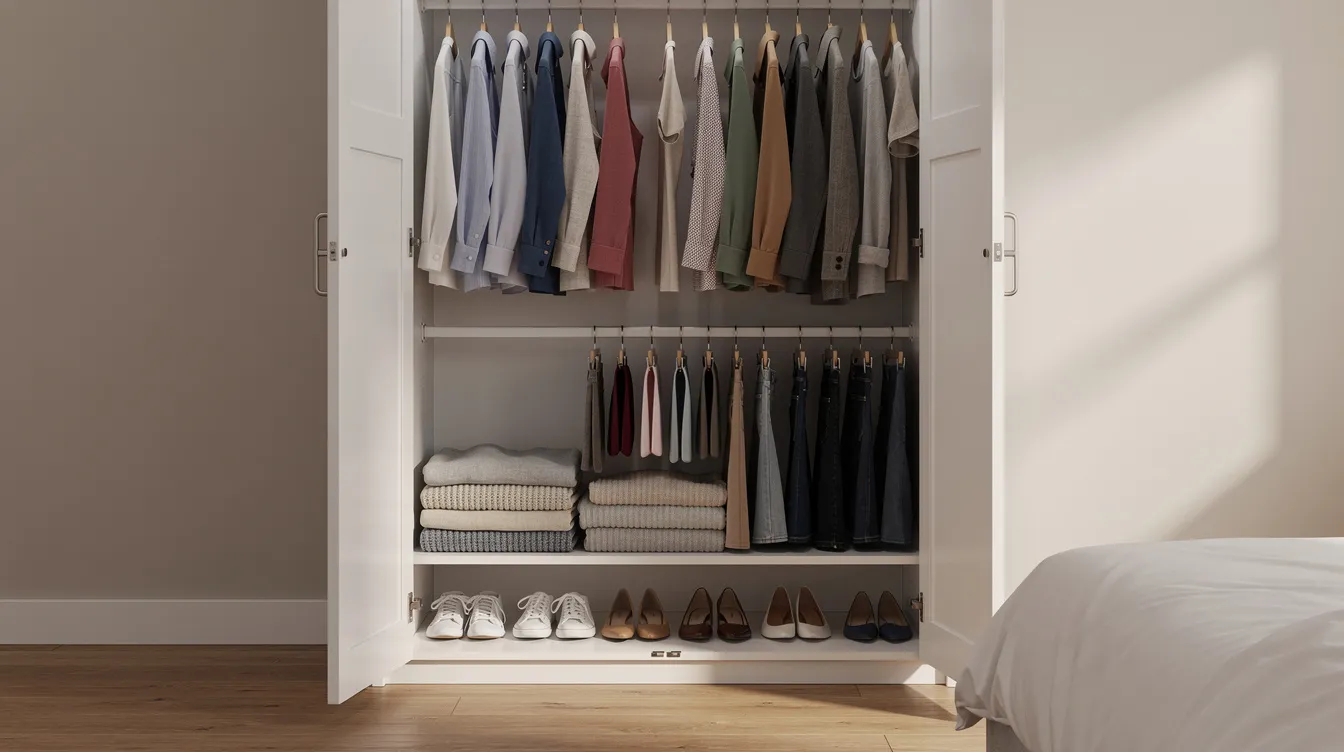
For clothing, pull out one type at a time: all trousers, then all sweaters, then all shoes. The Reverse Hanger Trick helps identify clothing that hasn’t been worn: turn all hangers backward, and after six months, anything still reversed hasn’t been on your body. If it’s uncomfortable, stained, or hasn’t fit since before 2023, it goes into the donate bag.
Build a “retirement wardrobe” that fits your current life: comfortable everyday outfits, a few dressy pieces, and shoes that are safe and supportive. Use drawer dividers to maximize storage efficiency for smaller items like scarves and belts. Add simple storage containers or shelf dividers only after the purge, especially for handbags and shoes. Make under-bed extra space either intentionally clear (safer for nighttime movement) or used for labeled seasonal storage.
Decluttering the Kitchen and Dining Area
Kitchens hold decades of family gatherings and gadgets, which makes them emotionally and physically full. Start with one category: mugs, baking pans, or plastic storage containers. Lay them all out so duplicates and worn items are obvious.
Concrete examples to get rid of: cloudy plastic containers without matching lids, chipped plates from the 1970s, duplicate slow cookers, or specialty gadgets you haven’t used since 2015. Keep enough for the life you have now. If you no longer host large holiday dinners every year, service for 6 makes sense instead of 24.
Take everything out of cabinets and drawers before deciding what stays. Use a few clear storage containers or turntables inside cabinets for spices, medicines, or small baking items, and label shelves so it’s easier to maintain order. Think of your kitchen in terms of active zones for frequently used items (near the stove and sink) and passive zones for rarely used items (upper cabinets, back of the pantry). Cleaning supplies belong in one designated spot, not scattered across three rooms.
Living Room and Everyday Common Areas
The living room is often the first space guests see and the room where clutter most affects your daily calm. Keeping horizontal surfaces clear makes rooms feel cleaner, so start with one flat surface at a time: coffee table, sideboard, TV stand. Clear one shelf and keep only five display-worthy items. Limit displayed items on surfaces to five; beyond that, even good things start looking like a mess.
Return “wanderers” to their homes: remote controls into a small basket, magazines into a single rack, blankets folded into a lidded storage container or ottoman. A landing table for keys near the front door simplifies daily routines and stops the “where did I put them?” hunt.
Advise limiting collections on display (figurines, framed photos, old DVDs) to a number you can enjoy. Box extras for family to review, or donate what nobody wants anymore. Organizing living areas involves regularly sorting and removing unnecessary items, not a one-time event.
Safe walking paths matter more every year. Ensure clear routes free of low tables, stacks of books, or baskets. CPSC data estimate that consumer product-related falls cause over 1.5 million emergency department visits annually among adults 65 and older, with about 10% caused by tripping over obstacles.
Paperwork, Photos, and the Home Office Corner
Paper and photos carry weight that goes beyond their physical size. Decades of tax records, medical files, and old correspondence can fill an entire room in cardboard boxes.
Use a simple triage for paper:
- Action: bills to pay, appointments to schedule
- File: recent tax returns (keep up to seven years), legal documents, insurance policies
- Shred/Recycle: utility bills and bank statements older than 1 to 2 years, unless needed for specific records
Keep critical documents (wills, powers of attorney, home deeds) in a clearly labeled, fire-resistant storage container or file box. Shred anything with account numbers or Social Security numbers.
For printed photos, take a slow, gentle approach. Gather albums and loose photos, keep the best, label people and dates where possible (“Thanksgiving 1998, Chicago”), and consider scanning a selection to preserve memories digitally. Invite adult children over to look through photos, pick favorites, and decide what digital copies they’d like. This is a pretty good way to share stories while you can tell them, rather than leaving everything for later.
Dealing with Sentimental Items Without Guilt
Sentimental decluttering takes more time and energy than any other category. Leave it until you’ve finished some easier spaces and built your decision-making muscles.
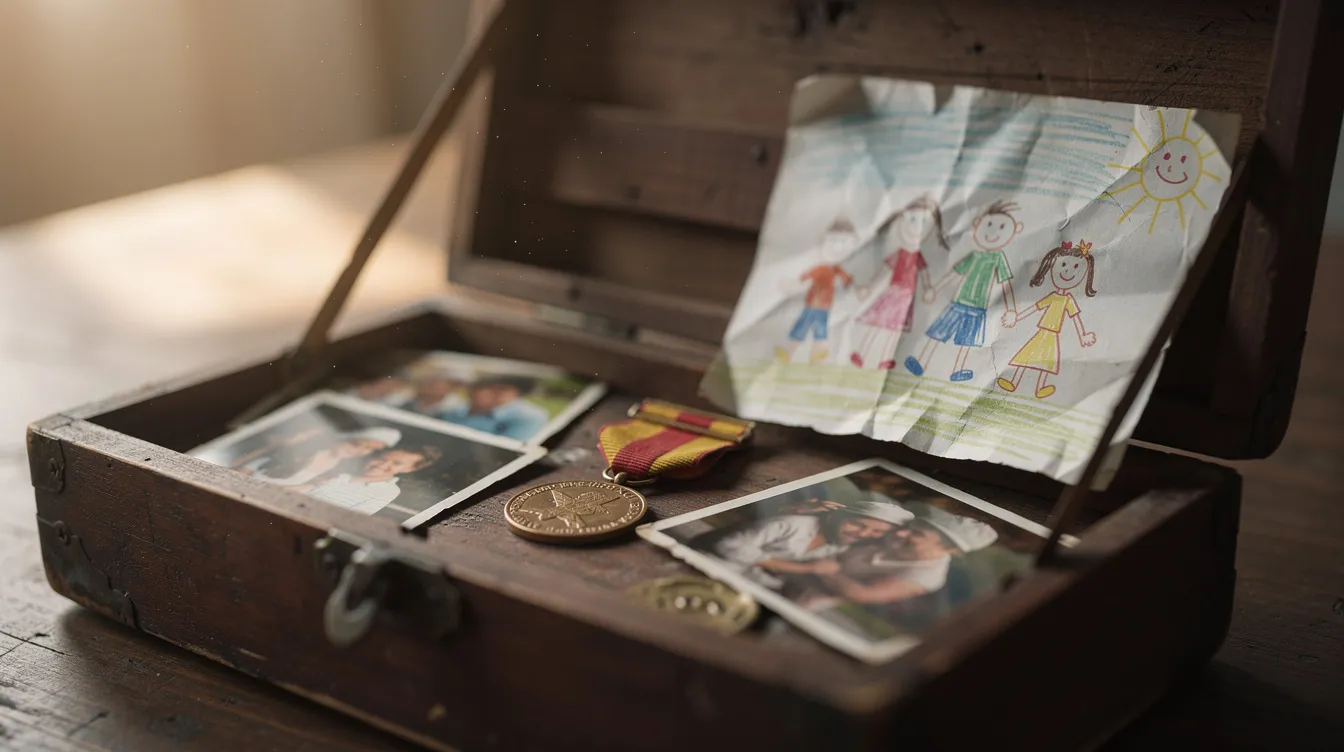
Specific categories to face: children’s artwork from the 1980s and 1990s, inherited china and crystal, travel souvenirs, trophies, and career memorabilia. For each person in your life, choose a set number of keepsakes; one memory box per child is a helpful limit. Photograph bulky items before letting them go. Research on older adults shows that people feel more confident releasing items when they’ve taken a photo first, because the memory cue survives without the physical burden.
Have honest conversations with family about what they truly want to inherit. It’s okay if the kids don’t want every item you’ve saved. Many retirees discover their children already have their own stuff and no storage space for more. Accept that gracefully, keep your favorite pieces, and let the rest go.
Reframe the process: donating a wedding punch bowl or extra quilts allows those objects to create new memories for another family, rather than sitting unseen on a closet shelf for another decade. Letting go is not disloyalty. It’s choosing to treat your home and your future with care.
What to Sell, Donate, Recycle, or Throw Away
Follow a simple decision path: sell if it has real resale value, donate if it’s in good condition but not worth selling, recycle when possible, and throw away only when necessary.
Selling: solid wood furniture, vintage tools, collections of records, or higher-end electronics that still work. Use Facebook Marketplace to sell items in good condition. For books, scan books’ barcodes for instant quotes on BookScouter; it takes seconds and saves you the trouble of guessing what they’re worth. Only bother selling items likely worth more than $25 to $50. Below that threshold, the time spent listing and negotiating rarely earns its keep.
Donating: clothing in good condition, extra linens, duplicate kitchenware, and small household items go to local thrift stores, shelters, or faith-based charities. Organize a charity pick-up for unwanted clothes so you don’t even need to load the car. Donate items immediately to avoid second-guessing decisions. The longer a “donate” pile sits in your garage, the more likely you are to pull things back out.
Recycling and disposal: shredding events handle old paperwork safely. Community hazardous waste days accept old paint, batteries, and chemicals; check your city’s 2026 schedule. Electronics recycling programs exist in most counties.
Set a clear deadline for your “to sell” pile: give yourself 30 days. Anything unsold by then gets donated. Money from sales is a nice bonus, but momentum matters more. Staying clutter-free is the point, not maximizing every dollar.
Using Storage Containers Wisely (Not as Hidden Clutter)
Organizing your home requires decluttering first to create space. Buying bins before purging just hides the problem in prettier packaging.
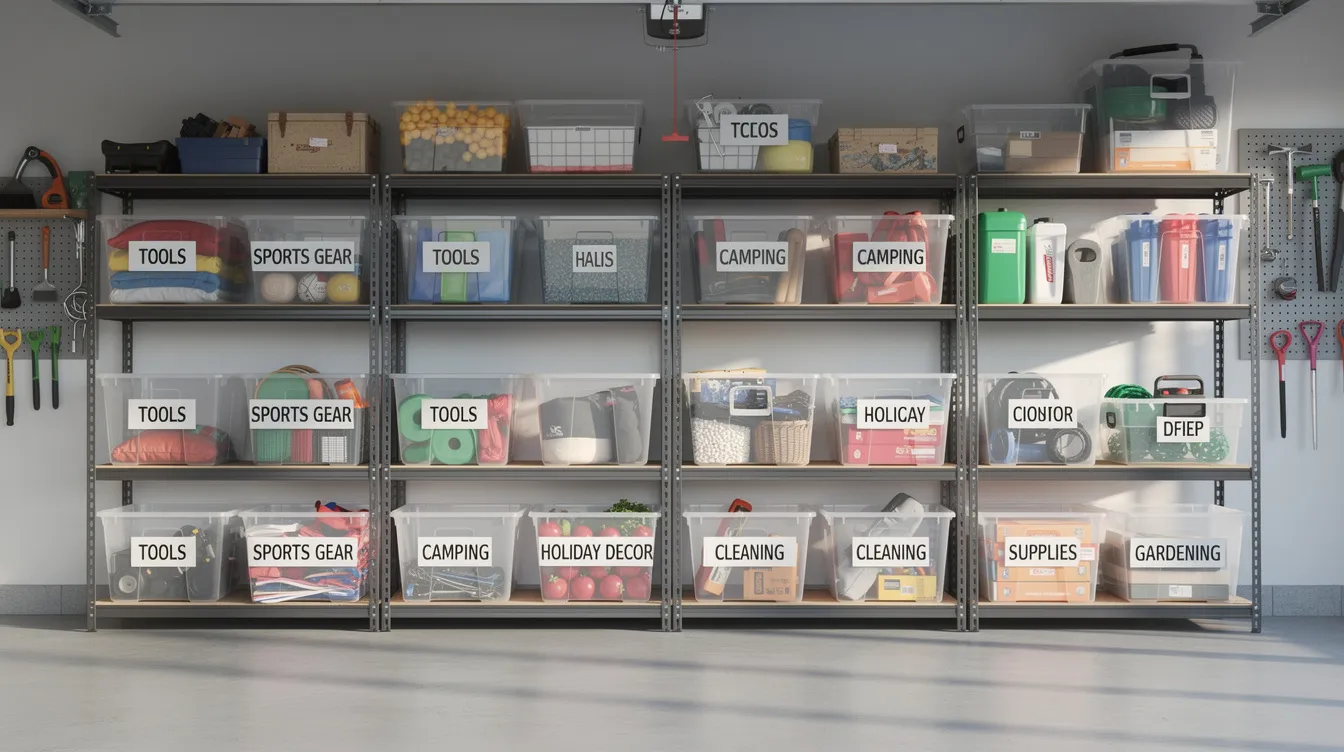
After the purge, measure shelves, drawers, and closets before buying any containers so they fit properly. Using clear bins and labels in storage promotes organization because you can see what’s inside without opening every box. Incorporating vertical storage can maximize small spaces, especially in closets and garages where floor area is limited.
For retirees, easy access matters. Choose containers with lids that aren’t too heavy, and avoid stacking bins so high they’re hard to reach or unsafe to lift. Label everything. Schedule a yearly review of what’s in long-term storage, asking whether those items still matter or belong in the home, with family, or at a donation center.
Involving Family Without Losing Control of the Process
Many retirees are decluttering with adult children and sometimes grandchildren in mind, but still want to lead the process. That’s your right.
Invite help on your terms: ask family to choose a weekend to move heavy boxes, photograph heirlooms, or decide what they’d like to keep now instead of later. Set ground rules: you decide what stays or goes. Family can claim items from the “offer” pile but are responsible for moving them by an agreed date.
For distant relatives, send photos of heirlooms and offer to mail small items. Be clear that unclaimed things will be sold or donated by a specific date; open-ended “someday I’ll come get it” promises lead to boxes sitting in your house for years.
Saying “no” is allowed. That includes to well-meaning kids who try to talk you into keeping everything “for the memories.” You are not a museum. You are a person building a home that works for the rest of your life.
Maintaining a Clutter-Free Home in Retirement
Once the big work is done, staying on top of clutter can take just a few minutes a day. A daily reset routine prevents clutter from building up. Spend 10 minutes each evening tidying main surfaces, immediately dealing with mail, and putting items back in their designated places. Everything should have a designated place in an organized home; if it doesn’t, it needs one or it needs to go. Daily tidying prevents waking up to clutter, which sets a better tone for the morning.
Apply the one-in, one-out rule for categories that tend to grow: clothing, books, hobby supplies. Every new item means an old one leaves. Set a recurring date to declutter (the first Saturday of every month, for example) to walk through your home with a small donation bag and remove anything no longer needed.
A clutter-free environment gives you more energy for travel, hobbies, grandkids, and the retirement you actually want. Your home should work for the life you have now, not the life you had 20 years ago.
Frequently Asked Questions
What if my spouse doesn’t want to declutter with me?
One partner being ready before the other is common, and pressuring usually backfires. Start with only your own belongings and shared “neutral” areas like the hall closet. Leave your husband’s or wife’s personal items alone. Have calm conversations about shared goals: a safer home, easier cleaning, less to manage. Agree on small experiments rather than big ultimatums. Try scheduling a time to review one shared space together, using agreed rules (“keep favorites, let duplicates go”) so both feel heard. Worry less about converting them and more about showing results; a cleared kitchen counter speaks louder than an argument.
How do I handle items I’m saving “for the kids” if they don’t seem interested?
Have direct conversations with each child. Show specific items: china sets, furniture, boxes of schoolwork. Ask what they truly want. Give chosen items now, when you can tell the stories behind them, instead of storing them for years. If they decline most things, accept it gracefully. Keep a few favorite pieces for yourself and donate the rest so they can be useful to another family. The hard time comes from expectation, not from the objects themselves.
Is it worth trying to sell things, or should I just donate everything?
Selling can bring useful extra money, but it also takes time and energy that may not be worth it for low-value items. A simple rule: only sell items likely worth more than $25 to $50, and donate the rest immediately. Use Facebook Marketplace or local consignment shops for furniture, electronics, or collectibles. Set a firm deadline of 30 days for listing and selling. Anything unsold by then gets donated to keep the process moving. Don’t let a “to sell” pile become its own form of clutter.
What should I do with old financial records and sensitive documents?
Keep recent tax returns (generally up to seven years), property records, legal documents, and major medical summaries. Shred anything with account numbers, Social Security numbers, or personal details using a home shredder or a local shredding event. Store essentials together in a labeled, fire-resistant box so family can find them if needed. Most utility bills and bank statements older than two years can go, unless your accountant or attorney advises otherwise.
How long should a whole home declutter project take at my age?
There is no “behind.” For many retirees, a realistic pace is 1 to 3 focused sessions per week over several months. Listen to physical limits: keep sessions short, use a chair while sorting, and get help for lifting or stairs. Celebrate each finished room or category so the process feels like a series of successes, not one endless job. The point is progress, not speed. Even one cleared shelf per week adds up to a transformed home by the end of the year.
Disclosure: Some of the links in this article may be affiliate links, which can provide compensation to us at no cost to you if you decide to purchase. This site is not intended to provide financial advice. You can read our affiliate disclosure in our privacy policy.
