
Stretching Exercises for Seniors: How to Reduce Stiffness and Move Better Every Day

Getting out of a low chair shouldn’t feel like an athletic event. Neither should tying your shoes, reaching for a mug on a high shelf, or turning your head to check a blind spot while driving. If movements like these have started to feel stiff or uncomfortable, you’re not alone – and you don’t need a gym membership or fancy equipment to do something about it. A handful of stretching exercises for seniors, done gently and regularly, can make a real difference in how your body feels day to day.
This guide walks you through why flexibility matters more after 60, which stretches target the areas that tighten most with age, and how to build a daily routine you’ll actually stick with.
Key Takeaways
- Stretching exercises for seniors help reduce stiffness, support balance, and make daily tasks like walking, dressing, and gardening easier. Gentle stretching helps seniors maintain mobility and reduce joint stiffness.
- Stretching should feel like gentle tension, not sharp pain. Older adults should avoid bouncing or forcing a stretch – ease back if discomfort occurs.
- Even 5–10 minutes of simple moves (like a seated spinal twist, hamstring stretch, and calf stretch) done most days can improve comfort and mobility.
- Stretching can improve independence and support balance for seniors.
- Talk with a doctor first if you have had recent surgery, joint replacements, or chronic conditions such as severe arthritis or osteoporosis.
Why Stretching Exercises Matter More for Seniors
After about age 60, the collagen in your tendons and ligaments gradually stiffens. Muscle fibers lose length, joint cartilage thins, and the natural lubrication inside your joints declines. The result is that familiar tightness in your hips when you stand up, your shoulders when you reach overhead, or your lower back when you bend to pick something up. Stretching improves flexibility and reduces stiffness in seniors by directly addressing these changes – gently coaxing tight muscles and connective tissue back toward their comfortable range.
The practical payoff is significant. Daily stretching activities can make getting dressed and walking easier, and stretching can ease everyday stiffness and improve posture. A 2025 meta-analysis of 29 randomized controlled trials found that stretching programs meaningfully improved walking speed in older adults – a key marker for fall prevention. Regular stretching exercises can reduce the risk of falls in older adults, and it can improve balance and coordination in seniors. Stretching also improves mobility and range of motion, increases blood flow and reduces inflammation, and enhances blood circulation, aiding muscle recovery. For people with mild arthritis or long-term back discomfort, gentle stretching can support circulation and pain relief without adding medications.
It’s never too late to start. Increased flexibility from stretching exercises helps older adults prevent injuries, and research shows improvements in range of motion can appear within just two to four weeks of regular practice. Stretching reduces stiffness in muscles and joints, enhances balance and reduces fall risk, and can even improve mental well-being and reduce stress by releasing muscle tension you may not realize you’re carrying.
Static vs. Dynamic Stretches: What Older Adults Need to Know
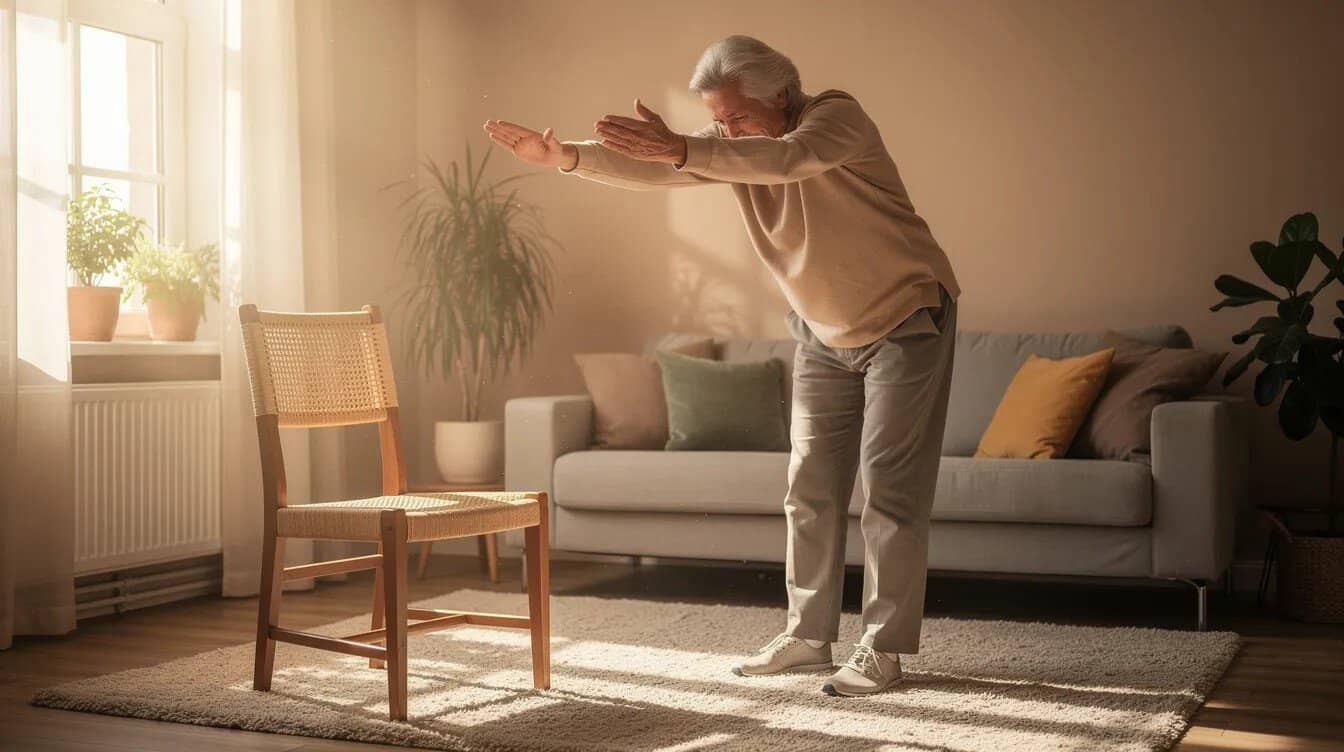
There are two main styles of stretching exercises, and both have a place in a senior fitness routine. Static stretching means holding one position – lengthening a muscle until you feel gentle tension, then staying there without moving. Think of a held hamstring stretch, a calf stretch against the wall, an overhead side stretch, or a seated spinal twist. Static stretches should be held for 10 to 30 seconds per repetition.
Dynamic stretches involve slow, controlled movement through a joint’s range of motion without pausing at the end. Examples include arm circles, marching in place, or a gentle cat cow stretch. Dynamic stretches should be repeated five to 10 times each. According to a 2025 Delphi consensus of stretching experts, dynamic stretches work best before physical activity – a walk, gardening, or light strength training – because they warm up muscles and increase blood flow. Static stretching is more effective afterward, or later in the day, when muscles are already warm. Both styles can be safe for older adults when done slowly, without bouncing, and within a comfortable, pain-free range.
Safety First: How to Prepare for Stretching Exercises
Consult your healthcare provider before starting new stretching exercises for seniors, especially if you’ve had recent surgery, heart issues, joint replacement, or advanced arthritis. A physical therapist can help tailor movements to your specific needs.
Before you stretch, warm up with light activity to prevent injuries and maximize stretching benefits:
- Walk around your home for 3–5 minutes
- March gently in place with easy arm swings
- Light walking at an unhurried pace is enough to get blood flowing
Key safety rules to follow every session:
- Move slowly and avoid bouncing during stretches to prevent strain
- Breathe normally while stretching to ensure comfort – never hold your breath
- Stretch to tension, not pain. If you feel sharp, shooting, or worsening discomfort, stop immediately
- Stretching should never be painful; ease back if discomfort occurs
- Use a sturdy chair or support to reduce fall risk during standing stretches
- Wear comfortable clothing and non-slip shoes (or bare feet on a stable surface)
- Clear the area of loose rugs or obstacles
Gentle Upper-Body Stretches (Neck, Shoulders, and Chest)
Hours of reading, watching television, or sitting at a desk pull the neck forward and round the shoulders inward. Stretching may involve neck, shoulder, and upper back exercises that reverse this pattern, easing headaches and improving posture over time.
Seated neck stretch: Sit tall in a sturdy chair with arms relaxed at your sides. Slowly tilt your right ear toward your right shoulder until you feel a stretching sensation along the left side of your neck. Hold 10–20 seconds, then repeat on the other side. Don’t pull your head – let gravity do the work.
Shoulder stretch: Reach your right arm across your body at chest height. Place your left hand on the upper right arm (not the elbow joint) and gently press to deepen the stretch. Hold 10–30 seconds with shoulders relaxed, then switch arms. This shoulder stretch targets the back of the shoulder and upper body.
Seated chest opener: Sitting or in a standing position, clasp your hands behind your back (or hold onto the back of a chair). Gently draw your shoulder blades together and lift your chest. A seated pec stretch opens up the chest and shoulders, counteracting that forward-rounded posture. If overhead positions are uncomfortable, rest your hands on your hips instead.
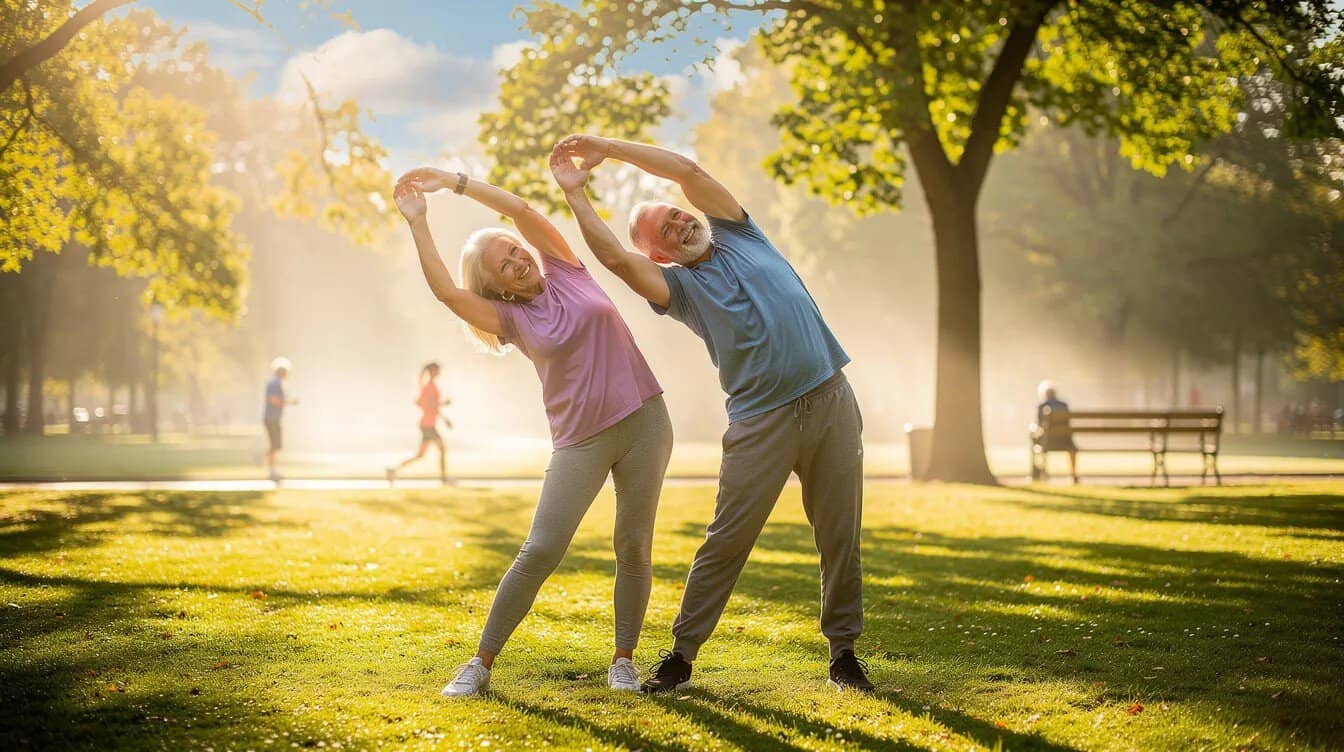
Side stretches can target the sides of the torso and ribs – try a gentle overhead side stretch by raising your left arm overhead and gently lean to the right, holding for 10–15 seconds, then switching to your right arm.

Spine-Friendly Stretches: Seated Spinal Twist and Cat Cow
A stiff back makes it harder to roll over in bed, tie shoes, or turn while walking. Gentle spinal stretches improve spinal mobility and can ease that locked-up feeling in your mid and lower back.
Seated spinal twist: Sit upright in a straight-backed chair with feet flat on the floor and toes facing forward. Place your left hand on your right knee. Slowly rotate your upper body to the right, looking over your right shoulder. Hold 10–30 seconds, then return to center and repeat on the opposite side. This seated spinal twist is one of the most effective exercises for seniors who sit for long periods.
Cat cow stretch (floor version): If you’re comfortable on the floor, start on hands and knees. Slowly round your spine toward the ceiling (cat), tucking your chin. Then gently arch your back, lifting your head upright and chest (cow). Move in a smooth rhythm for 5–10 repetitions.
Seated cat cow variation: Sit comfortably near the front of a chair with hands on thighs and knees bent. Alternate between rounding your back (dropping your chin toward your chest) and gently lifting your chest while looking slightly upward. This maintains spinal mobility without needing to get on the floor.
Move within a comfortable range. Avoid deep twisting or extreme backbends, especially with osteoporosis or a history of spinal fractures.
Hip and Seated Knee Stretches for Better Walking and Standing
Flexible hip flexors and hips help with walking, getting in and out of cars, and stepping onto curbs. Tight hips can tug on the lower back and shorten your stride. Seated stretching exercises are beneficial for seniors with mobility challenges who may not feel steady on their feet.
Seated knee to chest: Sit tall on a firm chair. Gently draw one knee toward your chest, holding behind the thigh or shin. Hold 10–20 seconds, then switch legs. This eases the lower back and hip area. Keep your left leg or right leg that’s not being stretched planted with the foot flat on the floor.
Seated hip stretch: Cross your right ankle over your left knee. Keep your back in a straight position and gently lean forward until you feel a comfortable stretch in the hip. Hold 15–20 seconds, then repeat with the other leg. The seated hip flexor stretch targets tight hip flexor muscles and the outer hip.
If you have a hip replacement, keep movements small and follow any range-of-motion precautions from your surgeon. Regular hip and seated knee stretches can improve stride length and decrease stiffness when you start walking after sitting for a while.
Hamstring Stretch and Calf Stretch: Protecting Legs and Lower Back
Tight hamstrings and calves pull on the lower back and make it harder to walk distances, climb stairs, or stand in line comfortably. The calf muscle is especially important – calf stretches can improve ankle mobility and balance, which directly affects how safely you move.
Chair-based hamstring stretch: Sit near the front of a sturdy chair. Extend one leg with the heel on the floor and toes pointing up, keeping that leg straight. Hinge forward from the hips with a straight back and gently lean forward until you feel a gentle stretch along the back of the thigh. Hold 15–30 seconds, then repeat with the other foot forward. A seated hamstring stretch helps maintain flexibility in seniors and protects the lower back.
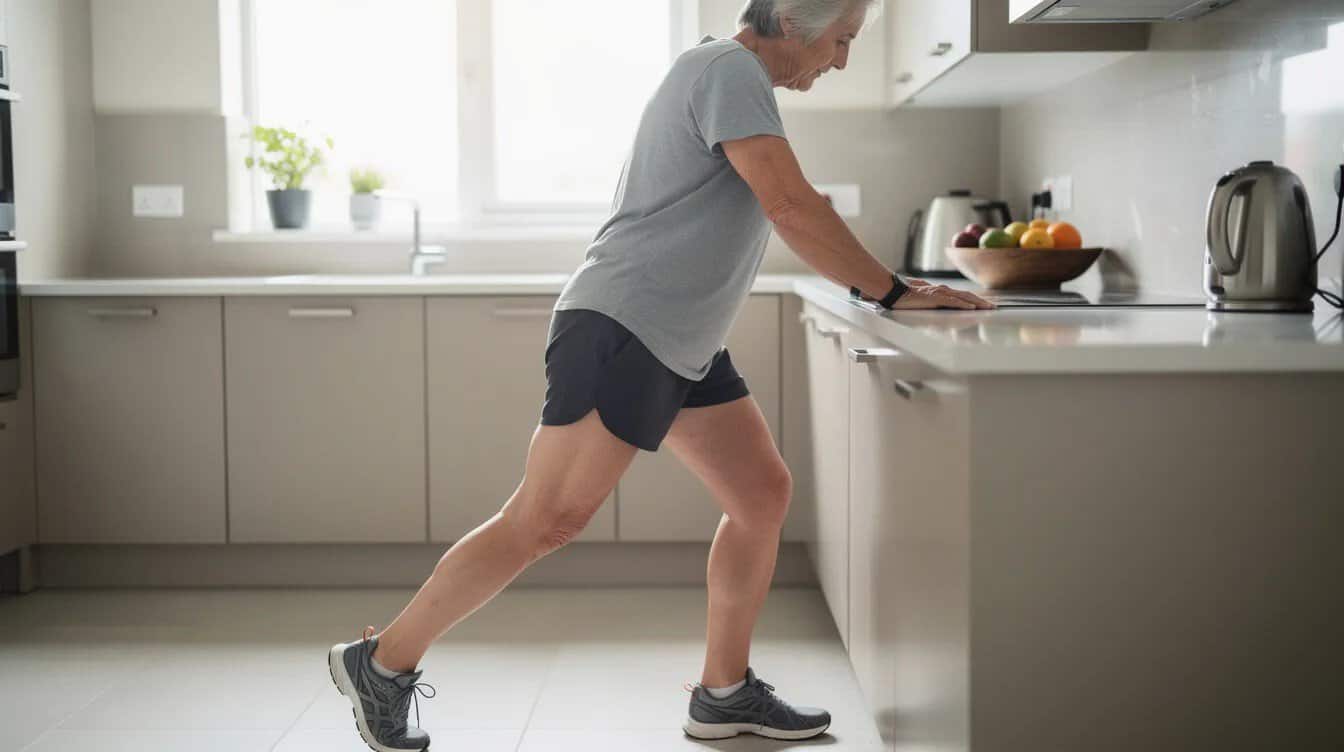
Standing calf stretch: Face a wall or countertop with feet hip width apart. Step your left leg back, keeping the heel on the floor and left knee straight. Bend your right knee slightly and gently lean into the wall until you feel a stretch in the back calf. Hold 15–30 seconds, then switch legs. This standing calf stretch improves ankle range of motion. Keep your head upright and breathe deeply.
Seated calf stretch (gentler option): Sit with one leg extended. Loop a towel or belt around the ball of your foot and slowly pull the toes toward your shin. This accommodates balance issues while still working the calf muscle effectively.
A standing child’s pose is a whole-body stretch exercise for seniors – stand facing a counter, hinge forward at the hips, and rest your hands on the surface while letting your spine lengthen. It’s a nice complement to targeted leg work.
Simple Dynamic Stretches to Start and End the Day
Dynamic stretches are ideal to wake up the body in the morning or before a walk. They require minimal equipment – just enough space to move.
Try these as a short 5-minute routine:
- Marching in place: Lift knees gently while swinging arms in a natural rhythm. 30–60 seconds.
- Arm circles: Extend arms to the sides and make slow, controlled circles – 10 forward, 10 backward.
- Gentle torso twists: Stand with feet hip width apart, arms relaxed, and rotate your upper body side to side. 8–10 repetitions.
- Dynamic overhead side stretch: Raise arms overhead (only as high as is comfortable) and slowly lean side to side without holding the end range. 5–8 per side.
Emphasize smooth, steady breathing and relaxed movements. Avoid jerky motions – releasing tension in your muscles works better when you stretch slowly and stay in control.
How Long to Hold Stretches and How Often to Do Them
Most static stretches work well when held about 10–30 seconds, repeated 2–3 times per side. A study of adults over 65 found that longer holds (up to 60 seconds) produced greater gains in range of motion – about 2.4 degrees per week – compared to shorter holds. Hold stretches until you feel slight discomfort, not pain.
Aim to practice stretching at least three times a week. The recommended frequency for stretching is 3 to 4 times a week to start, building toward brief daily sessions as your body allows. Incorporate stretching into your daily routine to enhance joint health. Gentle stretching routines should fit into daily life activities – not replace them.
Start with a “starter set” of 4–6 stretches: neck stretch, shoulder stretch, seated spinal twist, seated knee to chest, hamstring stretch, and calf stretch. Add others over time as incorporating stretching exercises becomes second nature. Stretching can improve flexibility and reduce stiffness – progress is gradual, but improvements in comfort and range of motion may be noticeable after 2–4 weeks of a consistent routine.
Even on low-energy days, two or three gentle stretches are still worthwhile. They maintain the habit and keep muscle tightness from creeping back.
Common Stretching Mistakes Seniors Should Avoid
Good technique keeps stretching safe. Common errors turn a beneficial exercise routine into a source of muscle pain or joint pain.
Mistakes to watch for:
- Bouncing at the end of a stretch – this ballistic motion risks micro-tears and strain in older tissues
- Forcing limbs into uncomfortable positions – competing with a memory of how flexible you used to be invites injury
- Rounding the back excessively during a hamstring stretch, or locking the knees during a standing calf stretch
- Holding your breath – this increases muscle tension instead of releasing tension
- Rushing through stretches or skipping warm-ups when feeling especially stiff or cold
Stretching is for pain relief and comfort. If a particular movement consistently causes joint stiffness or worsening discomfort, stop and consult a healthcare professional.
Building a Consistent Routine You’ll Actually Stick With
Habits form slowly. Small, repeatable routines work best – and seniors maintain flexibility gains not through intensity, but through showing up regularly.
Anchor stretching to something you already do every day:
- Morning: A 5-minute sequence of dynamic stretches after brushing teeth
- Afternoon: 2–3 stretches after a walk or before sitting down to read
- Evening: A 5-minute static stretching routine before bed to relax for sleep
Track progress by noticing what gets easier – reaching overhead, less stiffness getting out of bed, bending to pick up the mail. These matter more than dramatic flexibility gains. Maintaining mobility over years is the real goal.
Invite a spouse, friend, or join a group class for accountability. A new exercise routine sticks better when it’s social. Consistency is more important than intensity – and the best stretching routine is the one you actually do.
FAQ: Stretching Exercises for Seniors
How often should seniors stretch if they’re just starting out?
Beginners can start with 2–3 stretching sessions per week, focusing on a few basic moves from this guide. Practice stretching exercises at least three times a week and gradually work toward brief daily sessions as you feel more comfortable. Allow a day of rest between longer sessions at first if you feel unusually sore or fatigued.
Can stretching exercises for seniors help with sleep problems?
A short, gentle routine in the evening – such as a seated spinal twist, seated knee to chest, and an overhead side stretch – can relax tight muscles and calm the nervous system. Stretching can improve mental well-being and reduce stress, which often supports better sleep. However, chronic insomnia or frequent nighttime pain should be discussed with a healthcare provider.
What if I have arthritis – are these stretches still safe?
Many people with mild to moderate arthritis benefit from slow, pain-free stretching that keeps joints moving. Avoid forcing through sharp pain or stretching inflamed joints during a flare-up. If you have significant joint damage, recent flare-ups, or joint replacements, get personalized guidance from your doctor or physical therapist before trying new stretches.
Do I need special equipment for seniors stretching exercises?
Most exercises for seniors in this article require only a sturdy chair, a wall or counter for support, and optional items like a towel or belt for a hamstring or calf stretch. A non-slip mat can make floor-based moves like the cat cow stretch more comfortable but is not strictly necessary. You don’t need gym access to get started – your living room works fine.
Is it better to stretch in the morning or at night?
The best time is whenever you can be consistent. Many older adults enjoy gentle dynamic stretches in the morning and longer static stretching in the evening as part of their daily routine. Experiment with timing and notice when your body feels most responsive, then build your consistent routine around that time. What matters most is that regular stretching becomes a habit, not a chore.
Disclosure: Some of the links in this article may be affiliate links, which can provide compensation to us at no cost to you if you decide to purchase. This site is not intended to provide financial advice. You can read our affiliate disclosure in our privacy policy.
