
Walking for Fitness: A Practical Guide for Retirees

Walking is a low-impact exercise suitable for all fitness levels, and it might be the only piece of fitness equipment you ever need in retirement: your own two feet. No gym membership, no expensive equipment, no previous experience required. This guide covers how to turn daily walks into an effective exercise routine, with practical advice on pace, footwear, scheduling, and staying motivated over the long haul.
Key Takeaways
- Walking is a good exercise for retirees that improves heart health, mood, sleep, and mobility, and helps manage conditions like Type 2 diabetes and arthritis.
- Beginners can begin walking with as little as 5 to 10 minutes at a time, building toward about 150 minutes of moderate walking per week for better health.
- Walking fast enough to feel slightly breathless but still able to talk brings greater benefits than a gentle stroll, though both have value.
- A simple sample week (Monday through Sunday) can structure walks, rest days, and light strength training into a realistic routine.
- Consult your doctor before increasing your walking if you have heart disease, joint problems, dizziness, or other chronic conditions.
Why Walking Is a Powerful Fitness Tool in Retirement
You don’t need a personal trainer or a class schedule to get fit in retirement. Walking fits into the life you already have. You can do it from your front door, at whatever pace feels right, and adjust as you go. That simplicity is exactly why it works as a long-term fitness tool when other exercises get abandoned after a few weeks.
The health benefits are concrete. Walking lowers blood pressure and reduces risk of heart disease. It improves cardiovascular health and builds endurance. Walking boosts heart health and strengthens bones; a 2026 meta-analysis in the BMJ found that brisk walking for fitness 2 to 3 hours per week produced bone mineral density gains comparable to mixed aerobic and resistance training. Regular brisk walking can reduce heart attack risk by 30%, and walking just 21 minutes daily reaches that threshold. Walking burns calories and helps maintain a healthy body weight, and walking after meals can aid digestion and weight management.
Walking also reduces stress, anxiety, and clears the mind. It helps relieve symptoms of anxiety and can boost mood. It can improve sleep quality and metabolic health. Regular walking supports healthy aging and mobility.

Even if you haven’t exercised since your 50s, the benefits of walking are still available to you. A 2026 meta-analysis of 46 longitudinal studies covering about 368,000 adults aged 65 and older found that habitual walking was associated with lower risk of all cause mortality, reduced hospitalization, and better cognitive and psychological health. Walking can save Americans over $100 billion in healthcare costs annually; that figure alone tells you how much preventable disease walking addresses.
The activity scales to wherever you are. Flat, short distances at a comfortable pace for those just getting back on their feet. Hillier routes, walking uphill, and interval-style segments for fitter retirees looking for higher intensity. Both ends of the spectrum count as physical activity.
Before You Begin Walking: Safety and Medical Check-In
A few minutes of planning keeps walking safe and enjoyable, especially if you’re managing chronic diseases or recovering from a procedure.
Consult your GP or healthcare provider before you start walking more if you have heart disease, chest pain, severe arthritis, balance issues, recent surgery, or uncontrolled high blood pressure or diabetes. The U.S. Department of Health and Human Services recommends that older adults with chronic conditions work with a provider to understand what types and amounts of physical activity are appropriate.
Pay attention to how you feel during your current daily routine. If you notice unusual shortness of breath walking to the kitchen, chest discomfort climbing stairs, dizziness when standing, or joint pain that lingers after a short walk, bring these up with your doctor before adding more exercise.
Stop walking and seek medical attention if you experience sudden chest pain, severe breathlessness that doesn’t ease when you slow down, or sharp joint pain that worsens with each step.
Start where you are. For some people, a 5-minute stroll to the end of the street and back is a solid first step. That counts.
Walking Routine: Getting Started if You’ve Been Inactive
If it’s been years since you exercised regularly, you’re in good company. Stiffness, low confidence, and worry about overdoing it are all normal. None of them mean you can’t begin walking this week.
Start slowly with short, manageable bouts: 5 to 10 minutes, once or twice a day, on flat, familiar routes close to home. Gradually increasing walking intensity helps improve fitness levels, but the first goal is simply to move consistently without pain.
For the first 2 to 4 weeks, set realistic goals like adding 2 to 3 minutes every few days. Don’t chase big step counts yet. Use landmarks instead of numbers: walk to the mailbox, around the park once, or between two benches. This keeps the focus on comfort and consistency rather than performance.
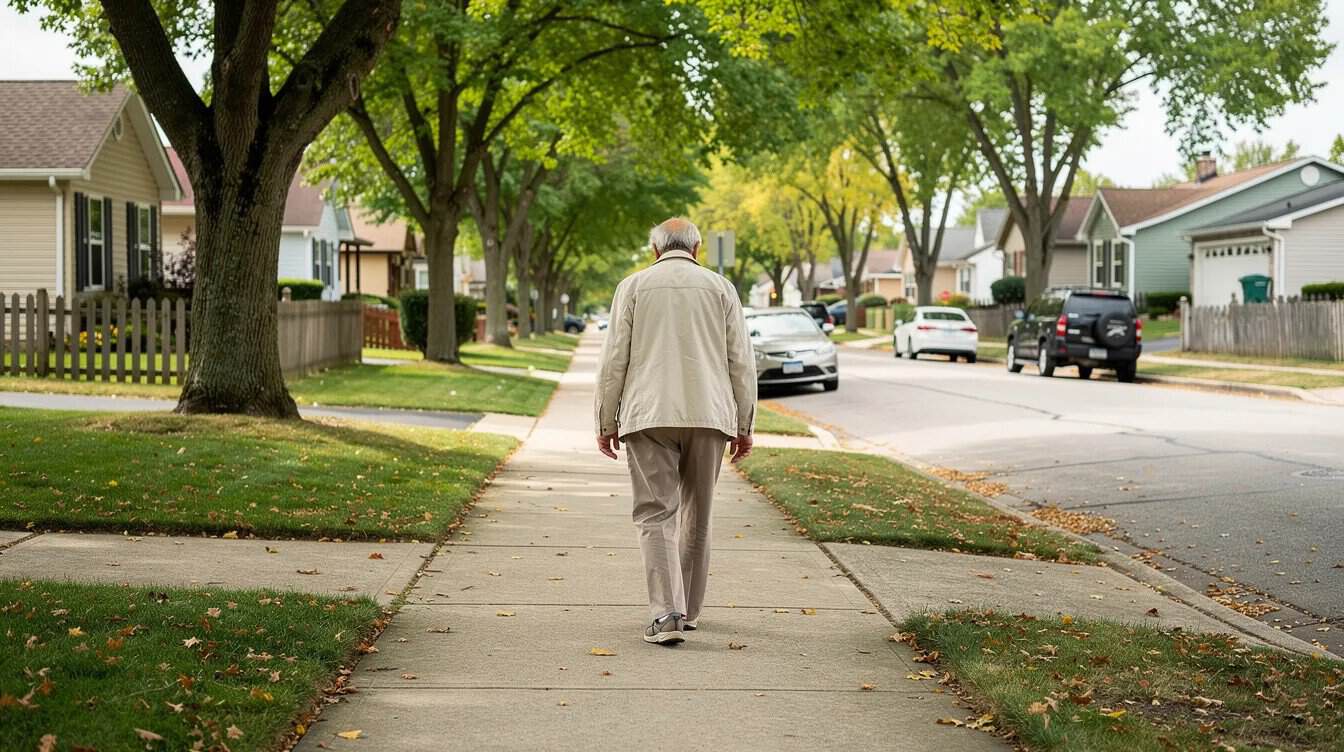
Mild muscle tiredness in your calves or thighs after a walk is normal, especially in the first week. Leg fatigue that fades by the next day is fine. Sharp or worsening joint pain, or soreness that lasts more than 48 hours, means you should ease off and shorten your next walk.
How Much and How Often to Walk for Better Health
The physical activity guidelines from the CDC recommend that older adults aim for at least 150 minutes of moderate-intensity walking weekly. That’s about 30 minutes on 5 days a week. Aim for at least 30 minutes of walking daily when you’re ready, but three 10-minute walks throughout the day count toward that total and deliver similar fitness benefits.
If you can already walk 30 minutes comfortably, you’re at the baseline. If you’re building up from 5 to 10 minutes, the 150-minute target is where you’re heading over several weeks, not where you need to be tomorrow. 150 minutes of walking weekly lowers diabetes and cardiovascular disease risk, so the destination is worth the patience.
Walking 10,000 steps daily is a common fitness goal, but a 2026 statement from the American College of Cardiology suggests that 4,000 to 8,000 daily steps already deliver meaningful benefit for many adults. Walking 10,000 steps daily lowers death risk from all causes, but improving from your own baseline matters more than hitting any single number. A meta analysis of step-count data found that each additional 1,000 daily steps corresponded to a 13% lower risk of all cause mortality among older adults.
At least 2 days a week should also include light strength training for major muscle groups. This doesn’t require exercise classes or a gym; simple body weight exercises at home cover it. More on that below.
Brisk Walking Pace, Technique, and Making Each Walk Count
Walking briskly brings greater benefits than a casual stroll, but “brisk” doesn’t mean exhausting. Brisk walking is about 3 miles per hour, roughly a 20-minute mile. At that pace, you should be able to talk but not sing, your breathing picks up, and you feel warmer. That’s moderate exercise, and it’s the sweet spot for heart health and fitness.
Proper walking posture includes keeping the head up and shoulders relaxed. Stand tall with your spine upright, eyes forward, arms swinging naturally, and roll gently from heel to toe with each step. For exercise walking, this posture reduces strain on your lower body and keeps blood flow efficient.
A few technique adjustments handle common issues:
- If balance feels uncertain, shorten your stride
- If knees hurt on hills, stick to flat routes or take smaller hills gradually
- Lean slightly forward from the ankles (not the waist) for a natural momentum boost
Interval training can enhance walking cardio workouts. Once you’re comfortable with your base pace, try walking fast for 1 to 2 minutes, then return to your comfortable speed for 2 to 3 minutes. Repeat this 2 or 3 times during a walk. This pattern builds endurance and helps boost energy levels without requiring you to sustain a hard pace for the entire walk.
Footwear, Clothing, and Where to Walk
Comfort equals consistency. The right walking shoes and a pleasant route make it far easier to turn walking into a healthy habit.
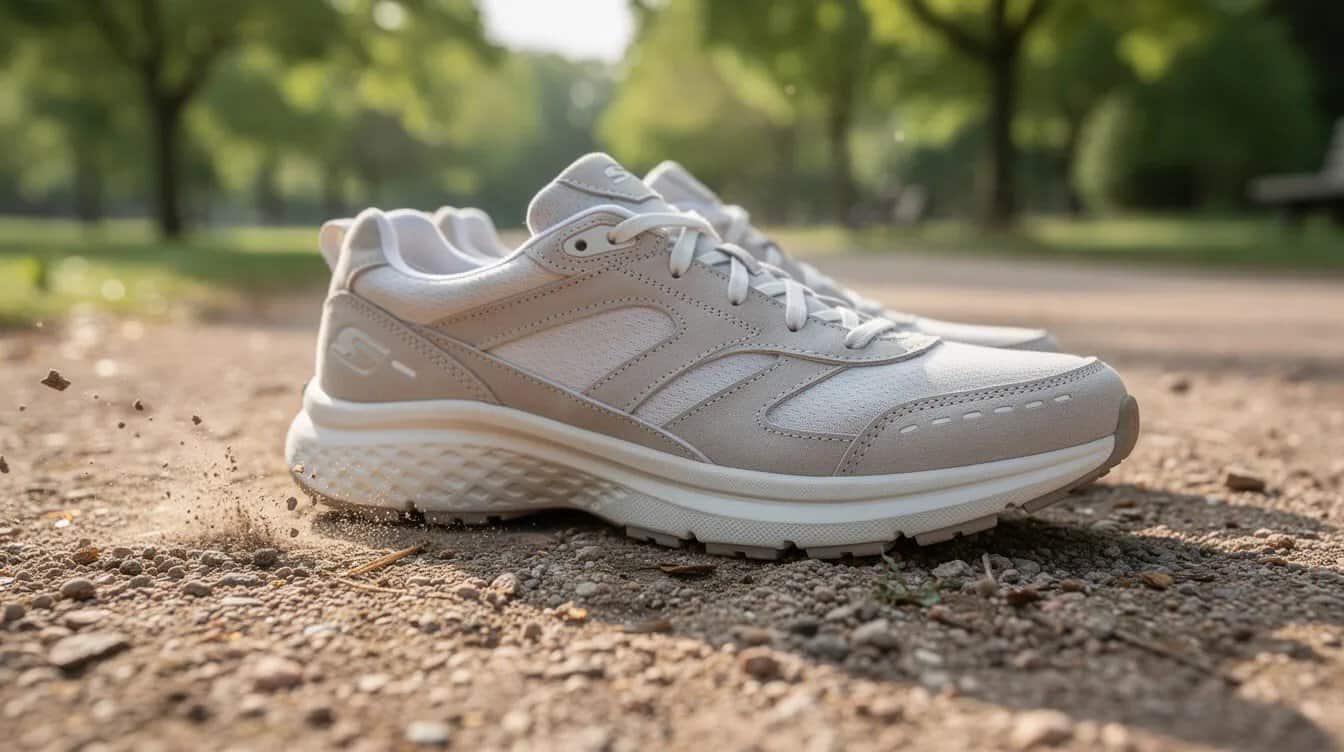
Good shoes for exercise walking have flexible soles and good arch support, a wide toe box, cushioning under the heel and ball of the foot, and a secure heel counter. Comfortable shoes should provide adequate support and fit well; if your current athletic shoes are more than a year old or the soles look worn and uneven, replace walking shoes when they feel less supportive or worn down. Most walking shoes lose their cushioning after 300 to 500 miles.
For clothing, keep it simple:
- Moisture-wicking fabrics help keep you drier while walking, especially in warmer months
- Wear layers in cooler weather for comfort during walks; a light waterproof jacket works in rain
- A hat and gloves in winter, a brimmed cap in summer
- Reflective clothing or bright colors at dawn or dusk for visibility
- A small backpack or waist pack for your phone, water, and keys
Walking in safe, well-lit areas is crucial for safety. Good walking locations include neighborhood sidewalks, local parks with benches for resting, indoor shopping centers on bad-weather days, and flat nature paths for variety. Walk with a friend or walking group when possible, carry a phone, and let someone know your fitness route and expected return time. Stay hydrated, especially in warm weather.
Strength Training and Balance Work to Support Your Walking Routine
Pairing walking with simple strength training combats age-related loss of muscle mass, supports joints, and improves balance and posture. You don’t need a gym or special equipment.
Here are 5 exercises that complement a walking routine, all doable at home:
- Sit-to-stand from a chair (8 to 10 reps): works quads and glutes
- Wall push-ups (8 to 10 reps): works chest, shoulders, arms
- Calf raises holding a countertop (10 to 12 reps): strengthens the lower body for walking uphill
- Supported squats to a chair (8 reps): builds leg and hip strength
- Resistance band rows (8 to 10 reps): works upper back and improves posture
Do these other exercises on about 2 days a week. Pair them with an easy walk day so the routine doesn’t feel overwhelming; for example, walk 10 minutes, then do your strength session.
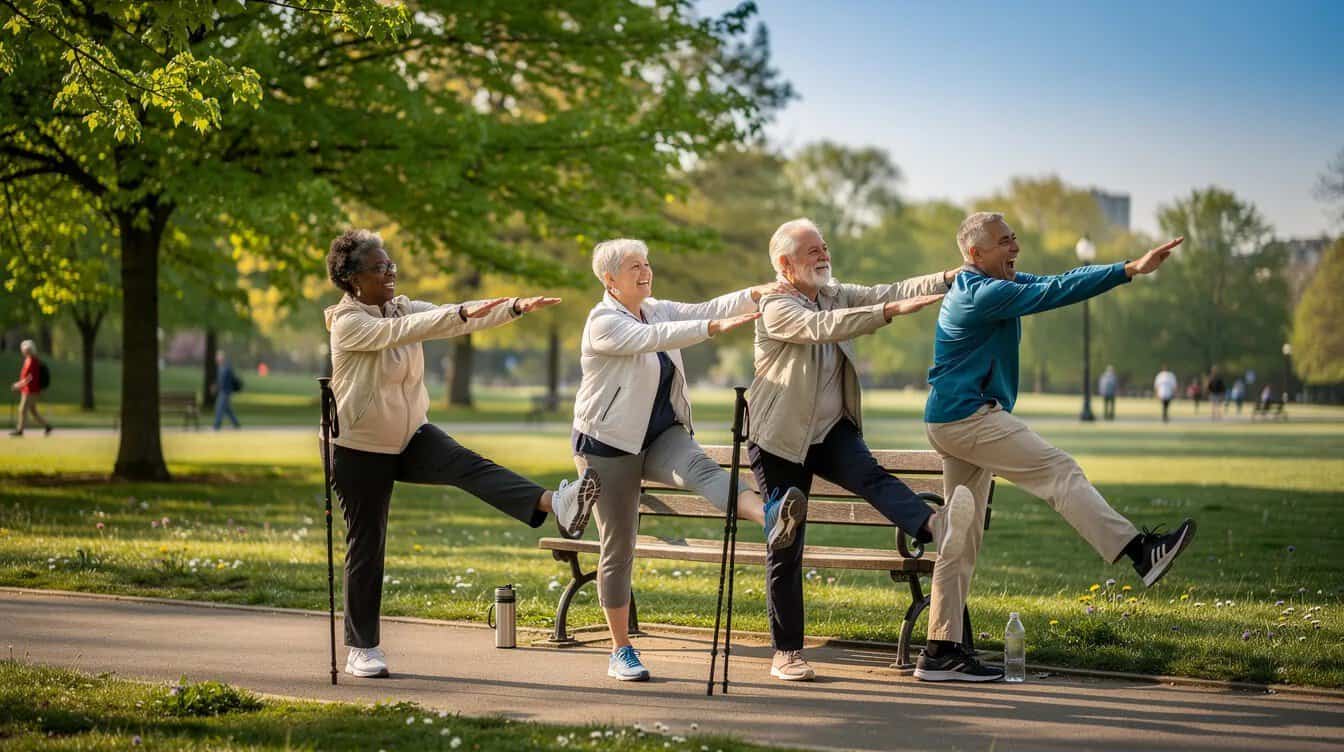
Balance drills reduce fall risk and build confidence: stand on one foot while holding a countertop for 20 to 30 seconds per side, or walk heel-to-toe along a hallway. Move slowly and controlled; stop any exercise that causes joint pain, sharp discomfort, or dizziness. Exercising regularly with these additions will improve physical function across the board.
Sample Weekly Walking Plan for Retirees
This plan is for someone who can already walk 10 to 20 minutes comfortably. Adjust times up or down based on your starting point.
Day | Activity |
|---|---|
Monday | 10-minute moderate walk (comfortable pace) |
Tuesday | 15-minute walk, then 10 minutes of body weight exercises and balance drills |
Wednesday | Rest day or a very light 5-minute stroll |
Thursday | 15-minute walk with two 1-minute brisk intervals mixed in |
Friday | 10-minute easy walk, then 10 minutes of strength training |
Saturday | 20-minute walk with two to three brisk intervals |
Sunday | Rest day or gentle stroll |
This walking program totals roughly 70 to 75 minutes of walking in week one, leaving room to grow.
After 2 to 4 weeks, add 5 minutes to one or two walks, or add an extra brisk interval to your Thursday or Saturday sessions. For fitter retirees, try long walks of 25 to 30 minutes, choose a route with a gentle hill, or extend the brisk intervals to 2 minutes. For those with joint issues, keep walks at the current length but add a second short walk later in the day instead of increasing duration all at once. The goal is a sustainable daily routine, not a rigid athletic program.
Staying Motivated and Turning Walking into a Healthy Fitness Habit
Enthusiasm dips after the first few weeks. This is normal; it happens to everyone, not just retirees. The key to staying motivated is building walking into your life rather than treating it as a separate “thing.”
Concrete strategies that work:
- Walk with someone. A friend, a neighbor, a local walking group. Social walks improve adherence because canceling on another person is harder than skipping a solo walk.
- Set realistic goals. Focus on days a week walked rather than speed or distance. “Four walks this week” is clearer and more motivating than “walk faster.”
- Track simply. Using an activity tracker can help maintain walking motivation, but a notebook where you tick off each walk works just as well. Track your steps using an app or pedometer if numbers motivate you.
- Make it enjoyable. Listen to an audiobook or radio show. Choose routes with pleasant scenery. Mixing up walking routes can help keep the activity engaging. Time your walk around a morning coffee stop.
- Plan for bad days. Have an indoor backup route (a shopping center, a long corridor at home, marching in place during TV adverts) so the habit stays alive on rainy or low-energy days.
Celebrate small wins. Completing a full week of daily walks, noticing that a familiar loop feels easier, or walking regularly for a full month are all worth acknowledging. Walking for fitness is a long-term healthy habit, not a short-term program with an end date. Regular brisk walking, done consistently, delivers better health year after year. Overall health improves not from one heroic walk, but from the accumulation of hundreds of ordinary ones.
The best walking routine is the one you actually do, day after day.
Pick one morning this week. Lace up your good shoes. Walk for ten minutes. That’s all it takes to start walking toward better health.
Frequently Asked Questions
Is it better to walk once a day or split my walks into shorter sessions?
For heart health and fitness, total time matters more than how it’s broken up. Three 10-minute short walks offer similar fitness benefits to one 30-minute walk. Retirees who tire easily, manage joint pain, or care for grandchildren may find several shorter walks easier to fit in and recover from. If you enjoy being out longer, a single daily walk is fine as long as it doesn’t cause excess fatigue the next day. Either approach counts toward the 150 minutes of moderate exercise recommended weekly. You can lose weight and lower risk of chronic diseases with either format.
What should I do if my knees or hips hurt when I walk?
Slow the pace and shorten the distance for a week or two to see if discomfort eases. Don’t power through sharp or worsening pain. Try softer, flatter surfaces like park paths instead of uneven sidewalks, and check your footwear for worn-out soles or poor support. If pain persists, speak with a doctor or physical therapist, especially if you have arthritis or past joint surgery, so a tailored plan can be created that protects your joints while still delivering the health benefits of walking.
Can I still benefit from walking if I use a cane or walking stick?
Assisted walking absolutely counts as health walking and brings meaningful benefits: better circulation, improved mood, and greater endurance over time. Focus on safe, stable routes with frequent resting spots, and walk with a companion if balance is a concern. As strength and confidence grow, you may be able to walk a little farther or a little faster. Safety and comfort always come first.
Is it safe to walk outdoors in winter or hot summer weather?
In cold weather, wear layers and avoid icy or ungritted paths. In heat, walk early in the morning or later in the evening and stay hydrated. Indoor alternatives keep the habit alive when conditions are unsafe: shopping centers, community halls, or even marching in place at home. Watch for signs of overheating (dizziness, nausea) or getting too cold (numb fingers, sustained shivering) and cut walks short when needed.
Do I need a fitness tracker or special app to make progress?
No technology is required. Simple measures like minutes walked per day or a known route you repeat work perfectly well. Some retirees enjoy pedometers or smartphone step counters because visible progress helps with staying motivated. Others prefer a simple walking log in a notebook. Choose whatever approach feels easiest. Consistency matters more than gadgets, and walking for fitness doesn’t require any more technology than a good pair of walking shoes and a front door.
Disclosure: Some of the links in this article may be affiliate links, which can provide compensation to us at no cost to you if you decide to purchase. This site is not intended to provide financial advice. You can read our affiliate disclosure in our privacy policy.
